
Lessons learned from Fukushima
Fukushima raised the bar for nuclear safety worldwide. The accident taught us to test installations even more rigorously, to pay attention to external factors, to strive for passive safety and to be willing to involve citizens.
Stress testing of nuclear facilities
The Fukushima accident highlighted the need to thoroughly reassess the safety of all 143 European nuclear power plants and subject them to a rigorous risk analysis. This was announced by the European Council on 24 and 25 March 2011. In the years that followed, so-called ‘stress tests’ were carried out.
Stress tests are designed to determine the extent to which a nuclear power plant can withstand extreme events and/or combinations thereof. Stress testing examines the potential consequences of external factors on the operation and safety of nuclear power plants and nuclear installations.
External factors
-
such as earthquakes, floods, extreme cold, extreme heat, snow, ice, storms, tornadoes, heavy rain and other extreme natural conditions.
-
such as terrorism, cyberattacks, plane crashes and explosions.
More information about the stress tests can be found on the FANC website.
Stress testing of emergency planning
Fukushima placed our contingency plans in a broader perspective. It made clear that emergency planning is not only about what can happen on-site, but also about how to continue operating when external factors disrupt access to or the functioning of a facility. This includes alternative access routes, mobile emergency control rooms, and redundant monitoring systems. It helped us prepare for situations that we previously thought were impossible.
The importance of citizen science
Fukushima showed us the importance of citizen science. The Safecast programme demonstrated how citizens can collect and share radiation data on a large scale. In fifteen years, it has grown into a global network with over 120 million open data measurements. It became one of the most successful citizen science projects ever. For several years, the tool has also been used to monitor air quality.
Did you know that we collaborated on a PhD research project on citizen science? This led to the development of an educational package on radioactivity and the impact of a nuclear accident on everyday life.
RReeaadd mmoorree aabboouutt tthhee rreesseeaarrcchh aanndd ssttuuddyy ppaacckk
Focus on passive safety systems
A third lesson learned from Fukushima is the importance of passive safety systems. Such systems ensure cooling even when emergency power fails and the pumps no longer actively circulate the cooling water. Typically, this leads us to Small Modular Reactors (SMRs). These small modular reactors rely on the principle of passive safety, such as natural convection, to cool the core in the event of a loss of external power and/or an accident.
SCK CEN is currently developing its own lead-cooled SMR. Lead has the added advantage that the reactor operates without pressure, so pressure-loss incidents cannot occur.
Read more about ...
-
Fukushima: the accident
-
Fukushima: today
-
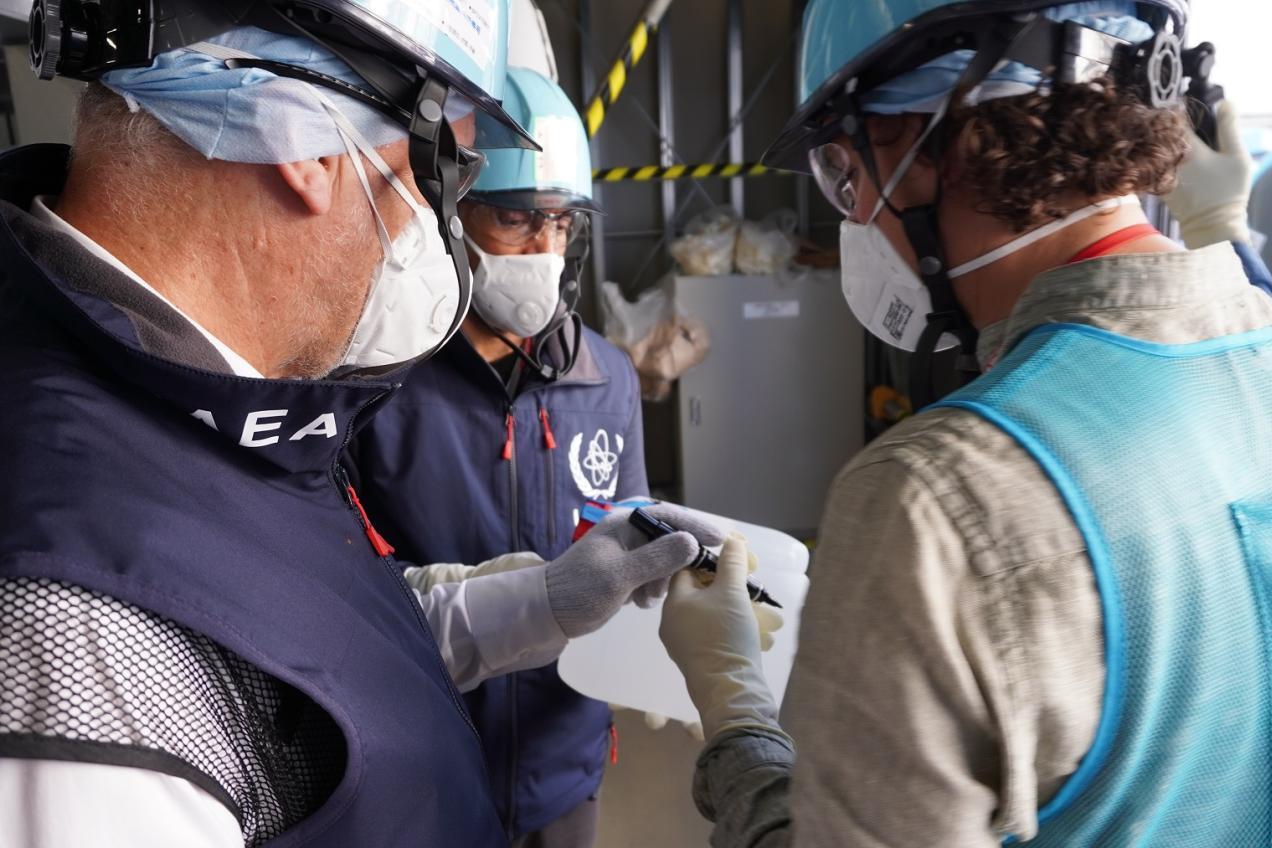
SCK CEN on site