
Fukushima: the accident
On 11 March 2011, Japan was struck by an earthquake at sea measuring 9.0 on the Richter scale. The earthquake caused the Fukushima Daiichi nuclear power plant to shut down automatically. The ensuing tsunami destroyed the cooling system of units 1, 2 and 3. Overheating caused the reactor core to melt, releasing large quantities of radioactive substances.
What caused the accident?
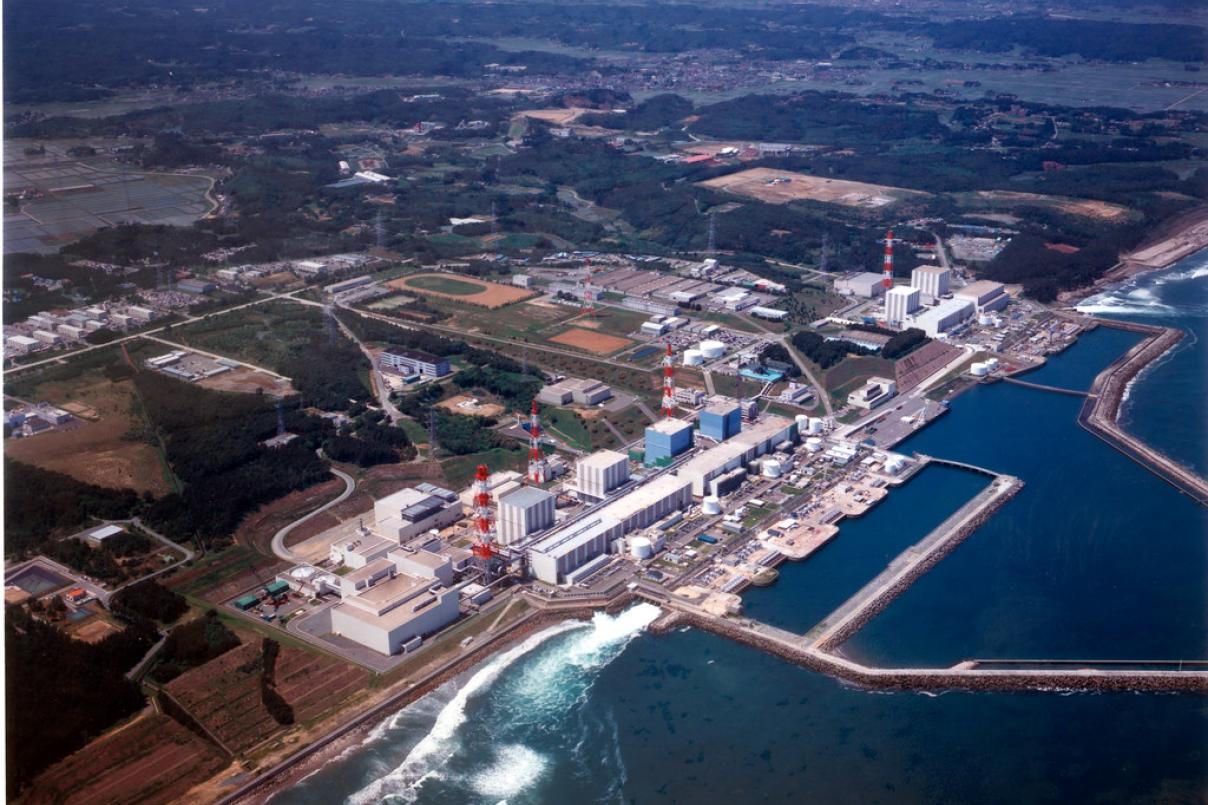
On 11 March 2011, at 2.46 pm local time, Japan was rocked by an earthquake. The tremor lasted six minutes and had a magnitude of 9 on the Richter scale. The epicentre was located 130 kilometres from the city of Sendai, in north-eastern Japan. There were two nuclear power plants on the coastline in that region: Fukushima Daini and Fukushima Daiichi. At the time of the earthquake, three of the six reactors at Fukushima Daiichi were in operation. The tremor triggered the automatic emergency shutdown, which successfully shut down the reactors. The emergency cooling systems immediately began to dissipate the residual heat.
A tsunami followed almost an hour later. When it reached the coastline, the tsunami was 15 metres high. The wall of water rose above the sea wall of the Fukushima Daiichi nuclear power plant, causing the power supply to fail. Both the external power supply and the emergency generators failed, and as a result the circulation of the cooling water stopped. The temperature in the reactor core rose, the cooling water evaporated, and the fuel rods became partially exposed above the water. In the process, they overheated, and melted. Due to the overheating, hydrogen gas was produced and accumulated beneath the roof. This eventually led to an explosion, releasing large amounts of radioactivity. In the aftermath of the nuclear disaster, seawater was used to cool the overheated nuclear reactors.
The neighbouring Fukushima Daini nuclear power plant was spared further incidents as a result of the tsunami because it is located on higher ground.
Radioactive cloud
At the time of the accident, there was a westerly wind. It drove the radioactive cloud eastwards, towards the Pacific Ocean. As a result, the radioactive particles spread mainly over the sea in the first few days. The maps show the dispersion of I-131 and Cs-137 during the first two weeks after the accident. After three days, the wind shifted inland, causing contamination in the country's interior. After this, the wind turned seaward again.
Could such an accident occur in Belgium?
The accident at Fukushima Daiichi nuclear power plant was caused by an extremely powerful earthquake at sea. This risk is much greater in Japan, as the island lies on the fault line between continental and oceanic plates. As a result, it regularly experiences severe earthquakes. The situation is different in Belgium. The Doel nuclear power plant is located in an area with low seismic activity. Although there is seismic activity in the Tihange region, its frequency and intensity are lower than in Japan.
There is also a difference in reactor type compared with the Doel and Tihange nuclear power plants. The reactors at Fukushima Daiichi are BWRs, which stands for Boiling Water Reactors. In such a reactor, the water boils directly in the reactor vessel. The steam produced then goes directly to the turbine to generate electricity.
The Belgian nuclear power plants at Doel and Tihange use PWRs (Pressurized Water Reactors). In these reactors, water in the reactor vessel is maintained at high pressure to prevent boiling. The heat is transferred via a heat exchanger to a separate secondary water circuit, where steam is produced. In a PWR, the reactor water and the turbine water are completely separate. This creates an additional physical barrier between the core and the outside world.
Inherently, BWR and PWR reactors can maintain the same standard of safety, based on the principle that radioactive materials should always remain confined within multiple protective layers. An important difference, however, lies in the building surrounding the reactor, known as the containment. In Belgium, this is a large, solid concrete structure, consisting of two shells each one metre thick, with a steel liner in between. At Fukushima, it was more compact and constructed differently.
Read more about ...
-
Fukushima: today
-
Lessons learned from Fukushima
-
SCK CEN on site