
40 years after Chernobyl - the accident
On 26 April 1986, reactor unit 4 in Chernobyl exploded. It is still today the most serious accident in the history of the peaceful use of nuclear energy. Over the past 40 years, both the causes and the consequences have been studied in depth. To understand how this accident could have happened, we need to go back to Friday 25 April 1986, a few hours before the disaster.

What exactly happened?
The hours before the disaster
On Friday 25 April 1986, a reactor shutdown for maintenance was planned at reactor 4 in Chernobyl, and a safety test would also take place. This test was intended to ascertain how much residual energy the steam turbines could still generate after the reactor had been shut down and steam was no longer being supplied to the turbines. The safety test was technically complex and had been carried out several times in previous years, each time unsuccessfully.
In preparation for the reactor shutdown, the operators reduced the reactor’s power output and switched off various automatic safety systems. The next step was to shut down electricity generation completely so that the test programme could start at 2:15 p.m. At that point, the reactor was still operating at around half its maximum power.
However, at the request of the electricity company, the safety test was postponed given the high energy consumption at that moment. The plant only received permission to halt electricity generation from reactor 4 and start the test 9 hours later, in the middle of the night. The night shift took over from the evening shift, which had already taken over the preparations from the day shift.
When they were finally ready to start the test, the reactor power unexpectedly dropped to an extremely low level. At that point, the operators should have aborted the test and shut down the reactor. They continued with the test nonetheless. The cause of this drop in power was so-called reactor poisoning, a phenomenon that occurs when a reactor runs at low power for too long.
In order to still carry out the test, the operators attempted to increase the power again. To do that, more control rods were removed from the core than authorised. As a result, the reactor reached an extremely unstable state. The operators were unaware of how serious the situation was, as they did not have the instruments to accurately measure this instability.
A test that lasted less than a minute
The safety test started 4 seconds after 1:23 a.m. on 26 April 1986. The test was intended to last less than a minute: as soon as the diesel generators had taken over from the shutdown steam turbines, the test would be over.
During the test, the reactor’s cooling pumps started to stall. But instead of decreasing, the reactor power started to rapidly rise. This was because of the reactor’s extremely unstable state: the nuclear chain reaction became increasingly intense through positive feedback, while so-called void formation meant that the cooling water started to boil.
40 seconds after 1:23 a.m., the operators pressed the AZ-5 button, with the aim of lowering the control rods fully into the reactor and manually shutting it down. It is not clear whether this was because they were worried about the reactor’s state, or whether it was a planned step in the test and maintenance procedure.
However, the emergency shutdown caused a sudden increase in reactor power – an effect that was known, but the risk of which had been significantly underestimated. This power surge prompted the reactor to seriously overheat. There was then a steam explosion, which could be felt in the control room a few seconds later. Observers outside the plant reported two explosions shortly afterwards.
Category 7
The damage was incalculable. The steam explosion destroyed the top of the reactor, the biological shield: a thick layer of concrete and steel designed to protect the surroundings from radiation. The shield was blown through the roof of the reactor building. A second explosion followed shortly thereafter, tearing the reactor core to shreds and halting the nuclear chain reaction. Pieces of burning material were thrown into the air and set the turbine building on fire.
According to an eyewitness who subsequently recounted the events, after the second explosion he saw ‘a beautiful beam of blue light, shooting into the sky like a laser, caused by the ionised air glow that seemed to rise up into infinity’.
The International Atomic Energy Agency (IAEA) published two reports on the disaster. According to the first report, human error was the root cause of the accident. However, in a revised version published several years later, the reactor design was identified as the main cause. Both reports identified a general lack of safety culture at all levels, both in management and in operational decision-making.
In the years following the accident, the IAEA introduced the INES scale (International Nuclear and Radiological Event Scale). This scale differentiates between seven levels of severity. Unsurprisingly, the Chernobyl disaster was classified at level 7, the highest level. Together with Fukushima, Chernobyl is still today the only nuclear disaster to have reached this category.
The cause of the nuclear disaster in Fukushima – a tsunami of unprecedented magnitude – was completely different to what happened in Chernobyl. Would you like to know why Fukushima was different? Find out in our web dossier.
The fire and the radioactive cloud
The blaze in the turbine building and the reactor hall was extinguished the same day, but the fire in destroyed reactor core continued for 10 days. A graphite fire raged in the core, which is particularly difficult to put out. In total, around 5,000 tonnes of various materials were dumped into the reactor. These attempts to extinguish the fire, by firefighters on the ground and helicopters above, plus the fact that the graphite gradually burned out, meant that it could finally be put out.
But in the meantime, huge quantities of radioactive material had been released into the atmosphere. These emissions continued for up to 20 days after the disaster and caused a radioactive cloud that spread over large parts of Europe.
The immediate consequences on human life were dramatic. Firefighters worked day and night, often without adequate protection and at risk to their own lives. 31 of them died in the following weeks from acute radiation sickness, as a result of the extremely high doses to which they had been exposed.
ASNR, the French Authority for Nuclear Safety and Radiation Protection (formerly IRSN), published a graphic showing how the radioactive cloud spread across Europe during the first two weeks after the accident. This reconstruction is based on international measurement data for caesium-137, a major fission product that was released into the atmosphere for days following the fire. Caesium-137 has a half-life of approximately 30 years and can still be detected in European environmental samples today as a result of the Chernobyl disaster.
HHaavvee aa llooookk aatt hhooww tthhee rraaddiiooaaccttiivvee cclloouudd sspprreeaadd
Could such an accident occur in Belgium?
Could a nuclear accident like the one in Chernobyl happen in Belgium? This question crops up regularly whenever nuclear energy is discussed.
The accident in Chernobyl was the result of a specific reactor design, combined with human error and a sub-standard safety culture. The reactor that exploded was a RBMK reactor, a fundamentally different design from the reactors we use in Belgium.
Belgian nuclear power plants use pressurised water reactors (PWR). This type of reactor is intrinsically stable, has multiple physical safety barriers and is operated within a strictly regulated framework. Combined with clear procedures and a strict safety culture, an accident like the one in Chernobyl is extremely unlikely here.
What about reactor design and how do we make future reactors even safer?
And today?
The fire and the radioactive cloud caused severe contamination of large swathes of Ukraine, Belarus and Russia. This area covers approximately 150,000 km², with radioactive caesium being the main long-term concern. Following the disaster, a so-called exclusion zone was established within a 30-kilometre radius of the reactor. More than 336,000 people were evacuated, including all 55,000 inhabitants of the town of Pripyat.
It is still not possible to return to this zone, but nature has since made a remarkable recovery there.
What is the current situation with reactor 4? And are there plans to make the area habitable again at some point?
Remediation
In the immediate vicinity of the reactor, the so-called exclusion zone, human habitation is still prohibited. At the same time, nature has been given a remarkable amount of space. Animals and plants have partially reclaimed the area, although radioactive contamination remains a constant concern. 40 years after Chernobyl, it is clear that the area will not become completely ‘clean’ any time soon. As such, the focus is on targeted measures and continuous monitoring. Over the past decades, governments and international organisations have taken various initiatives to reduce exposure to radiation:
-
radioactive particles were removed by thoroughly scrubbing and cleaning streets, roofs and gardens. In some cases, the top layer of soil was also dug up. The result was a noticeable reduction in radiation levels, but large quantities of low-level radioactive waste were created at the same time that had to be safely stored.
-
where people still lived, the focus was on safe food. Farmers had to avoid contaminated pastures, and livestock were given clean feed and special additives that bind radioactive caesium in the animals’ bodies. Agricultural land was also improved through fertilisation and cultivation, reducing the uptake of radioactive substances by plants. In the Chernobyl exclusion zone (approximately 30 km around the reactor), farming is officially prohibited; the zone has been evacuated and is used for monitoring, research and nature conservation.
-
active ‘remediation’ proved unfeasible. Consequently, mostly restrictive measures were introduced, such as restrictions on logging, hunting and gathering mushrooms and berries, as these still absorb radioactive substances. Preventing fires was also particularly important, to prevent radioactive material from being released back into the air in the event of a forest fire.
Serious forest fires raged in the exclusion zone in 2020. At the time, we also contributed to the measurements, calculations and reporting. Read here why there was no cause for concern at the time.
-
the focus was primarily on protecting the population. Drinking water sources were temporarily shut off and in some areas a fishing ban is still in place. Large-scale remediation of water bodies generally turned out to be neither practical nor economically viable.
The approach in the wake of Chernobyl was completely different to that in Fukushima. Read how Fukushima made soil remediation the main focus, with more than 20 million m³ of soil being excavated and temporarily stored.
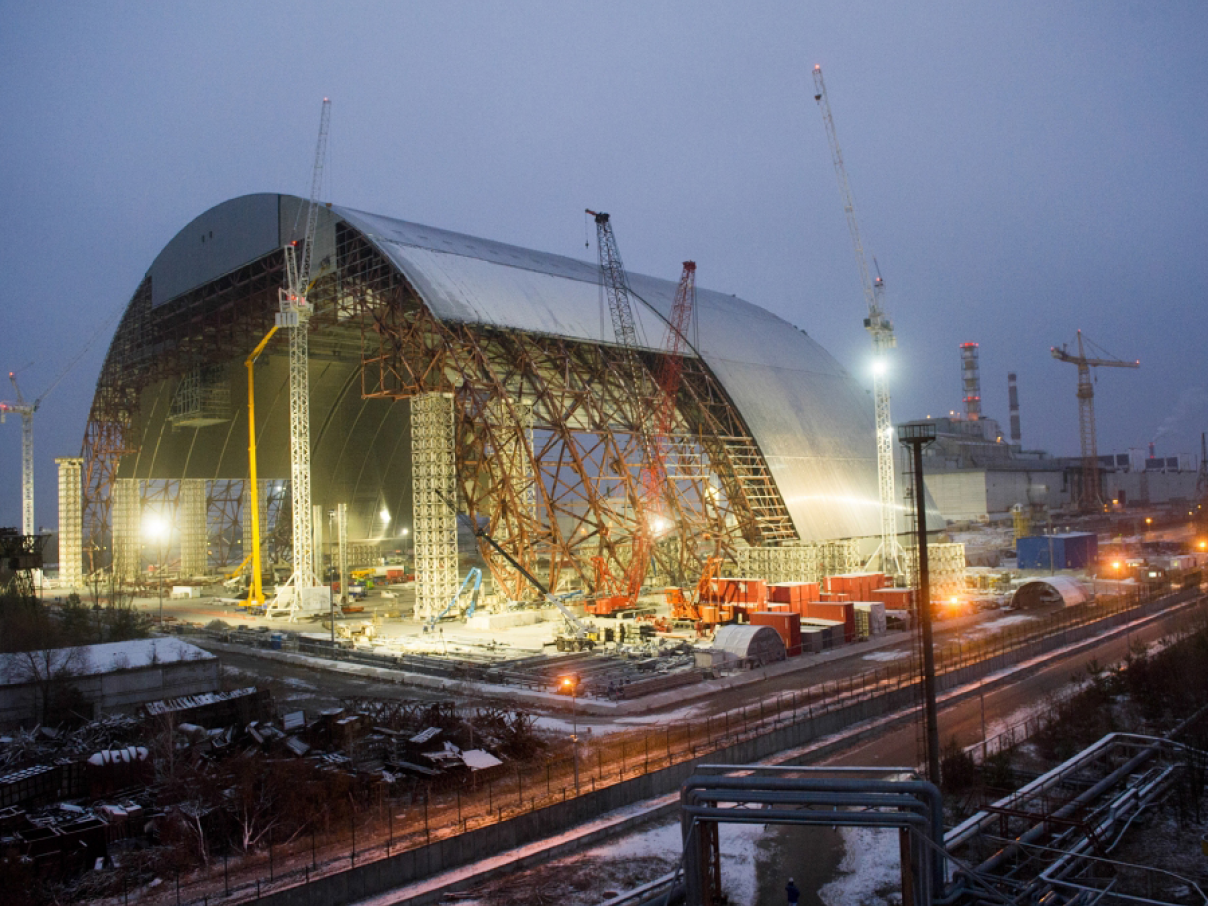
Sarcophagus and confinement over reactor 4
A concrete sarcophagus was built on top of the reactor building following the accident. The structure was hastily designed and completed between June and November 1986. The entire structure rested on the heavily damaged reactor building and, after only about 10 years, was already showing serious signs of deterioration, so much so that various stabilisation measures were needed. It was clear that a new cover was necessary, as it was neither safe nor even possible to decommission the structure within this original sarcophagus.
Construction started on a new shelter over the old sarcophagus in 2011. Construction of the New Safe Confinement was completed five years later, in 2016. This confinement is designed to last for at least 100 years. The decommissioning of reactor 4 must take place within this period. In February 2025, the shelter was struck by a Russian drone.
The new confinement in figures
-
The enormous stainless steel structure was built thanks to cooperation between 27 countries.
-
A total of 1,200 workers were involved in the construction of the new confinement.
-
This is the weight of the New Safe Confinement. The structure could not be hoisted up, and was therefore guided over the old sarcophagus via rails. Since then, it has provided extra protection for the exploded reactor building.
-
The sarcophagus was built to last 100 years.
Decommissioning of reactor 4
The confinement was therefore built to last 100 years, and the decommissioning of the reactor must take place within this timeframe. It is technically feasible to carry out the decommissioning within this New Safe Confinement, but the current war situation has put the planning of these works on the back burner.
How to start a decommissioning project? Various techniques are necessary to successfully decommission the reactor. It is not yet clear what the exact approach will be. The decommissioning of the three other reactors, which supplied electricity until the end of 2000, is scheduled to take place first. This decommissioning is expected to be completed by 2065.
SCK CEN has many years of experience thanks to the pioneering work carried out during the decommissioning of BR3 (Belgian Reactor 3), Europe’s first pressurised water reactor and the first fully decommissioned nuclear reactor project.
Together with our industrial partners, we develop innovative techniques to approach specific challenges in nuclear decommissioning. For example, we collaborate with MAGICS Instruments to ensure electronics function reliably in nuclear environments, and we have developed advanced radiation-resistant camera technology for inspection and decommissioning.
Want to know more about how SCK CEN approaches decommissioning projects?
Want to know more about the Chernobyl disaster? To mark the 25th anniversary of Chernobyl, we published a comprehensive brochure which also explains the radiation doses received by the local and Belgian populations.
Read more about …
-
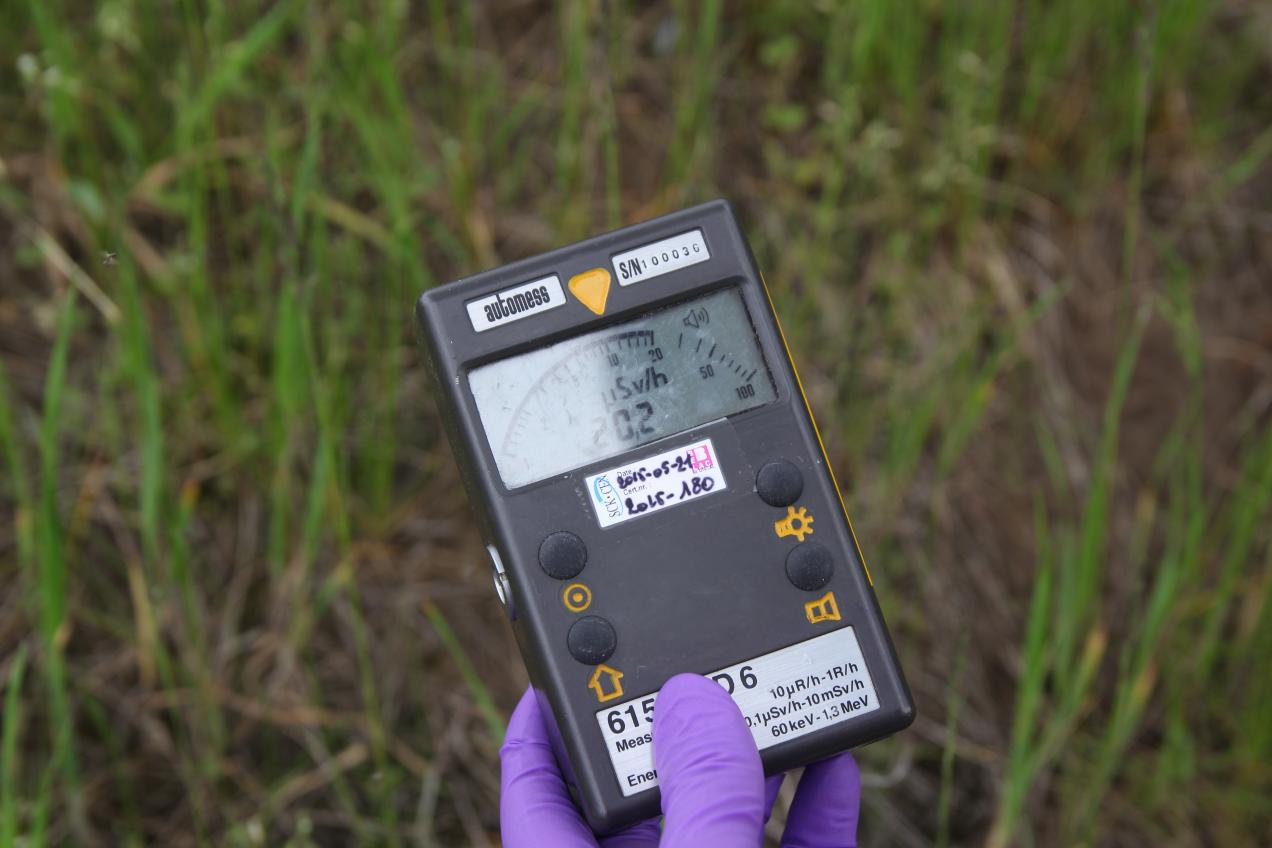
How we measure and what we know
-

Emergency planning and notification
-

Insights into reactor design