SCK CEN pins on a yellow ribbon for "Day Against Cancer"
Meet Stijn and find out more about his work in the fight against cancer
Today, 17 October 2024, is this year's "Day Against Cancer" in Flanders. It's a day when we all wear a yellow ribbon in support of cancer patients and their loved ones. As such, we make sure they know that they are not alone. On this day, we also shine the spotlight on our scientists, like Stijn. Patients have much better prospects, thanks to their work.

The nuclear research centre SCK CEN is making a significant contribution to the fight against cancer. It is an important link in the production of medical radioisotopes and is conducting specific research on an innovative cancer treatment called radioligand therapy. The treatment uses therapeutic radioisotopes to very specifically target cancer cells in the body. The healthy tissue remains largely undamaged. The result? Fewer side effects and thus a better quality of life. It is already providing a valuable treatment option for prostate cancer and neuroendocrine tumours and offering another option in the fight against cancer, on top of existing therapies such as chemotherapy and surgery.
Stijn Ramaekers (34) is one of our young scientists working on radioligand therapy.
Stijn, what is your role in the fight against cancer?
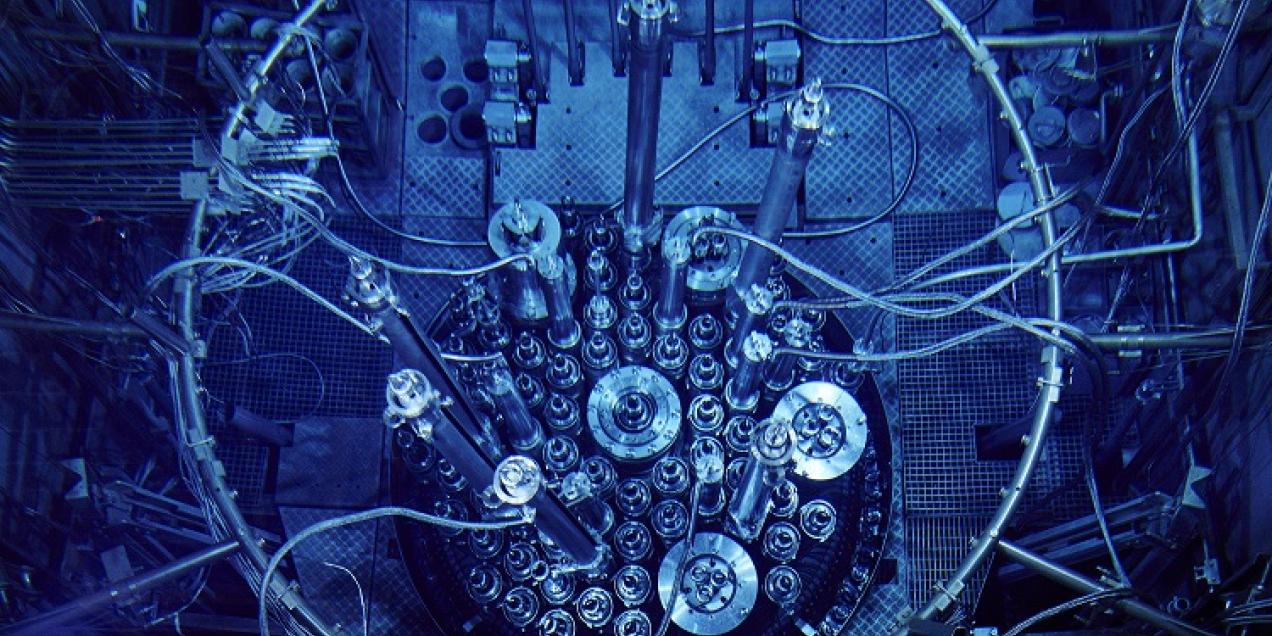
Stijn: "Medical radioisotopes are used to detect and treat cancer. They do not occur in nature; they have to go through an entire production process. The raw material is first irradiated in the BR2 research reactor. Irradiation transforms a small part of the raw material into a medical radioisotope. At that moment, however, the desired radioisotope is still located among the remaining raw material and other isotopes. I work with my colleagues, using radiochemical techniques, to isolate the radioisotope we need for cancer treatment. Radioactivity decays, so every minute between production and patient counts."
Can you tell us about a moment when you realised the significance of your work?
Stijn: “That was last year, without a doubt. We know that the medical radioisotopes we produce are administered to patients several days later. That's already really motivating but last year, we were able to see a patient in the flesh too. Francis Ligot came to share his personal experience with us. He told us what the treatment meant to him, to his fight against cancer and to his quality of life."
Why do you often think back to it now?
Stijn: "He said something that still sticks with me: 'La vie est belle et mérite d'être vécue' - life is beautiful and deserves to be lived. These are the lyrics of one of his favourite singers, Alain Souchon. 'Rien ne vaut la vie.' When he had told his story, you could have heard a pin drop in the room. In that moment, everyone realised just how significant our work really is. A copy of those lyrics is still on my desk."
It reminds you who you are doing it for every day.
Stijn: "Yes, and he's not the only one. About 1 in 3 men and 1 in 4 women develop cancer before the age of 75. That's an absurdly high number."

How do initiatives like the "Day Against Cancer" help the fight?
Stijn: "Cancer affects us all, and the more support we give, the bigger the difference we can make for future generations."
You are running in the Kom Op Tegen Kanker run next year. Why do you see this as so valuable?
Stijn: "For me, participation is both mental and physical. The distance requires physical effort, while the minute of silence at the start connects everyone. Everyone has someone in mind at the start, which creates a strong sense of belonging. Participation in such an event also goes beyond just raising money. It's all about awareness. When we raise money for our efforts or ask people to donate, it makes them think too. They take a moment to reflect on the existence of the cancer organisations and why they are important. For me, that highlights the essence of our participation: you feel as if you are sharing a little of the struggle that cancer patients and their families face. Their journey is physically and mentally demanding, and that is precisely what makes our efforts so valuable."
What would you recommend to people who want to contribute but don't know how?
Stijn: "Everyone can do something! You don't have to be a top athlete. The "100K Run" or "1000K Bike Ride" are well-known examples, but there are countless other initiatives such as the "Warmste Week" too. There are always activities you can get involved in, big and small."