Summit calls for radioligand therapy to be a key part in Belgian Cancer Plan
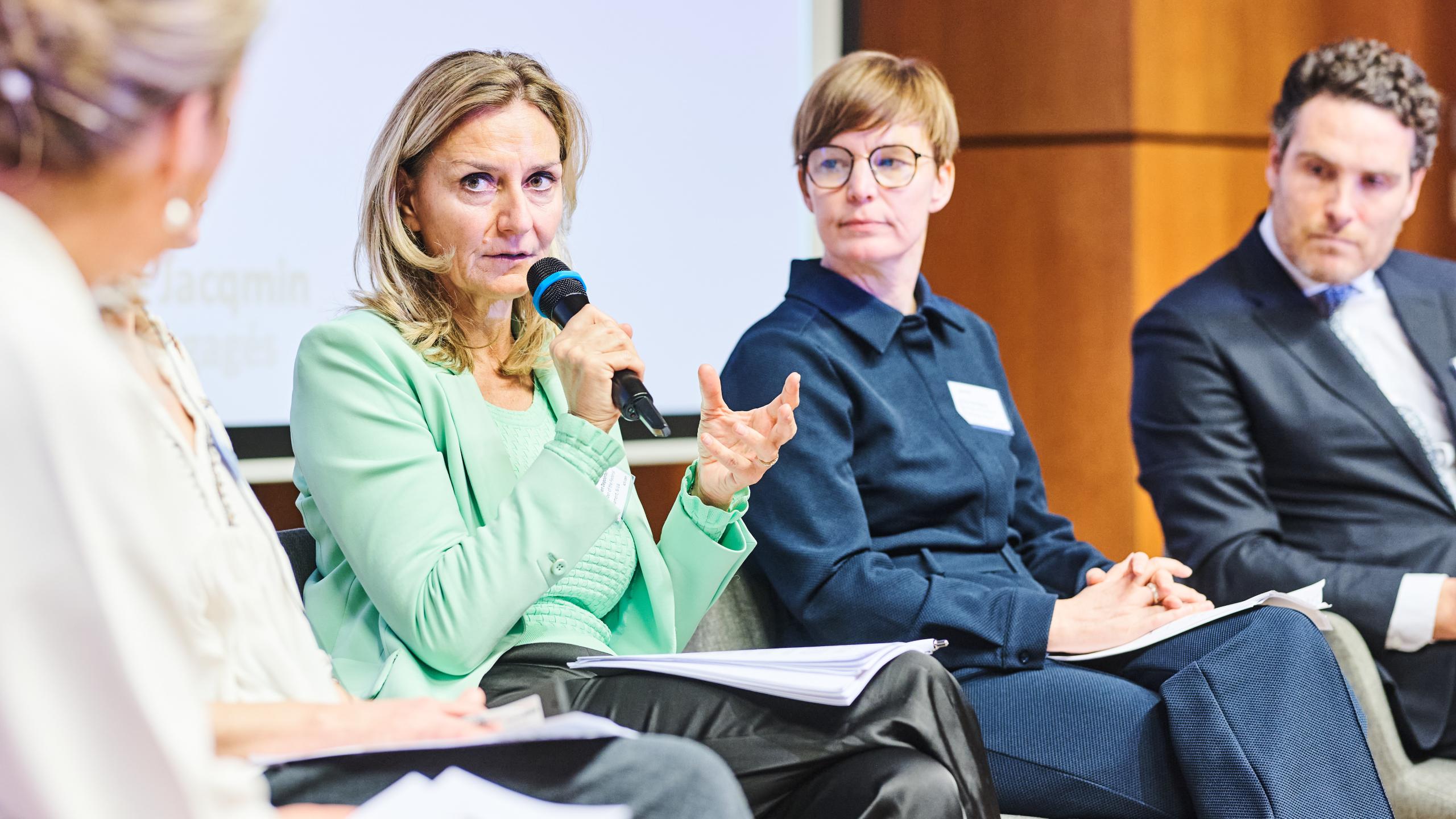
By 2035, ten to fifteen times more cancer patients will be eligible for radioligand therapy (RLT). Today, policymakers, clinicians and experts are gathering at the “Scaling up nuclear medicine” summit to address the question: “What steps must we take to ensure these patients are not left out?” The ambition is to embed RLT in Belgian cancer policy, prepare our healthcare system for the wide-scale deployment of RLT and position Belgium as an international pioneer.

Today, radioligand therapy is used only to treat neuroendocrine tumours and metastatic prostate cancer. A key feature of this type of treatment for cancer is that patients experience fewer side effects and maintain a better quality of life. Meanwhile, around 400 clinical trials are under way worldwide to extend radioligand therapy to other types of cancer. Several of those are in the final clinical phase. "The number of patients eligible for radioligand therapy is expected to increase tenfold or even fifteenfold by 2035 and we need to prepare for that now,” explained Sarah Baatout, Deputy Director of the Nuclear Medical Applications Institute at SCK CEN. The prospect of so many patients being able to benefit from this treatment is gaining increasing political traction.
“In 2025, Belgium helped to treat almost 13 million patients worldwide by producing medical radioisotopes. Nuclear medicine is a true sector of excellence for our country. We benefit from a unique ecosystem that brings together cutting-edge institutions, high-quality infrastructure, and internationally recognised expertise. This gives us a responsibility and an opportunity: to continue playing a leading role in Europe and around the world by making the most of our expertise. After all, behind these applications lie lives, hopes and care pathways.” says Mathieu Bihet, the Minister for Energy, acknowledging the importance of radioligand therapy. He is not alone in this view. Other politicians have also shown their support in the form of two draft resolutions submitted to the Belgian Chamber of Representatives, one by Kathleen Depoorter (N-VA) and the other by Irina De Knop (Anders). Such a resolution sends an important signal. Members of Parliament use it to raise an issue on the agenda.
-----------------
1. Ninatti, G., Lee, S. T., & Scott, A. M. (2025). Radioligand Therapy in Cancer Management: A Global Perspective. Cancers, 17(21), 3412. https://doi.org/10.3390/cancers17213412

Quickly increase capacity
The process is already underway, but there is still work to be done on several fronts: infrastructure, long-term vision and legislation. Today, policymakers, scientists, clinicians and experts are coming together to discuss these issues. RLT4Belgium, the Belgian radioligand therapy action plan, has already identified priorities. At the present time, the poor geographical distribution of PET scanners, a shortage of therapy rooms, limited reimbursement and mandatory overnight stays are inhibiting the widespread deployment of radioligand therapy. Demand for medical radioisotopes is rising sharply. In addition, there is a growing need to enable physicians specialising in nuclear medicine to become part of multidisciplinary oncology teams more quickly and on a more widespread basis. “These recommendations will allow us to quickly increase capacity. Broader reimbursement will enable doctors to evaluate the diagnosis and the likelihood of response to treatment in a single action. Shorter hospitalisation times will also immediately free up therapy rooms. However, scaling up production will require investment in infrastructure. Such choices must therefore be made at a political level,” explained Nadia Withofs, a nuclear medicine specialist at CHU de Liège and former chair of the Belgian Society of Nuclear Medicine (BELNUC). The summit will give both resolutions and the preparatory work carried out by RLT4Belgium a fresh impetus considering the growing importance of radioligand therapy.
Integration within the new Belgian Cancer Plan
That impetus has come at the right time. New clinical applications are on the horizon. At the same time, the Ministry of Health, the FPS Public Health, RIZIV/INAMI and Sciensano are working on the Belgian Cancer Plan for the period 2026-2030. That long-term plan aims to improve cancer care by focusing on prevention, early detection, quality treatment and aftercare. “As part of our mission to ensure safe, effective and high-quality treatments, the FAMHP supports the Cancer Plan and aims to contribute to the further development and establishment of radioligand therapy as a new treatment option,” outlined Hugues Malonne, director general of the Federal Agency for Medicines and Health Products (FAMHP). This can make radioligand therapy a cornerstone of cancer treatment in Belgium.



Nuclear medicine in Belgium in figures
Belgium has all the necessary assets to deploy radioligand therapy on a large scale and take on a pioneering role in that area. In total, our country has:
- 5000 professionals
- 350 physicians specialising in nuclear medicine
- 18 recognised “Theranostics Centers of Excellence”
- 2 Belgian institutes, namely SCK CEN in Mol and IRE in Fleurus. They are playing an indispensable role in the global production of medical radioisotopes.
- 35,000 shipments per year departing from Belgium and transporting medical radioisotopes safely worldwide
- Strong capacity to conduct clinical trials
How radioligand therapy works
Radioligand therapy combines two essential components: a ligand that binds to specific receptors on cancer cells and a radioactive substance – or radioisotope – that delivers targeted irradiation to those cells. Once injected into the bloodstream, this combination navigates purposefully to the tumour and any metastases. Once bound, the radioisotope irradiates the cancer cells in a precise way, causing them to die and the tumour to shrink. Thanks to this precision approach, as much healthy tissue as possible is spared, resulting in fewer side effects and a better quality of life for the patient.