
From VENUS to LEANDREA: building on years of research
The European EU-SMR-LFR programme aims to shorten the traditionally long timelines associated with nuclear projects by involving nuclear regulators from the very beginning of the reactor development process. To that end, an international pre-licensing programme has been underway since 2025, enabling the consortium to engage early with regulators and align on expectations and safety requirements.
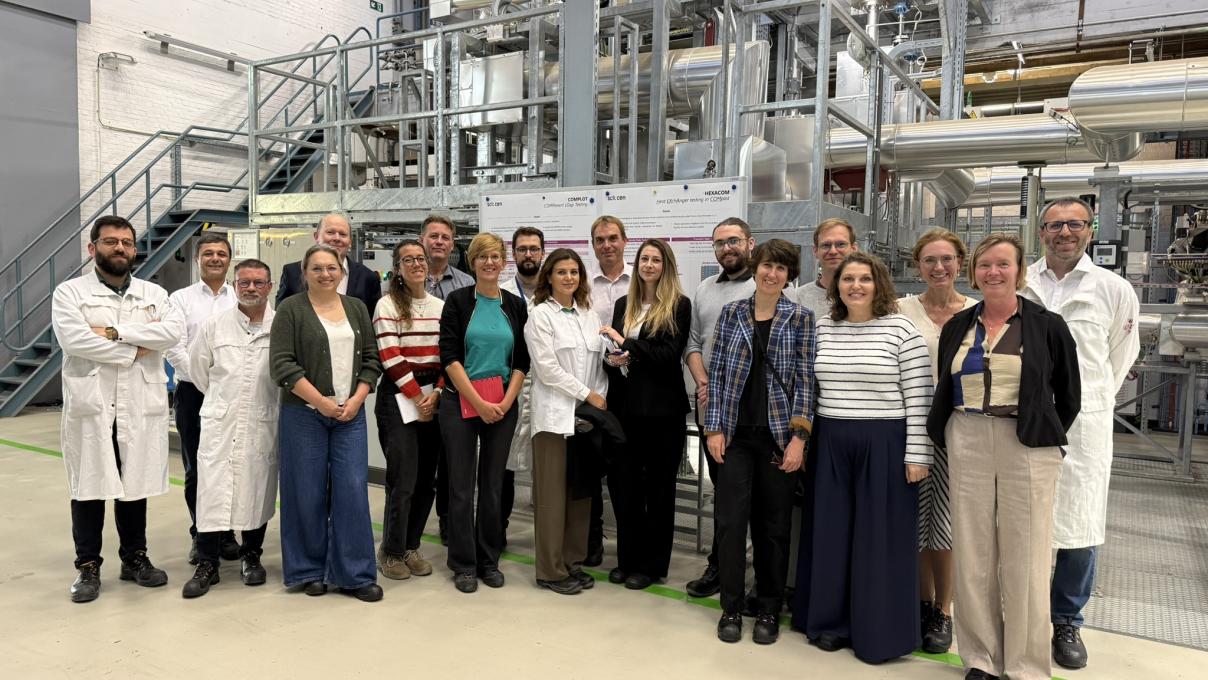
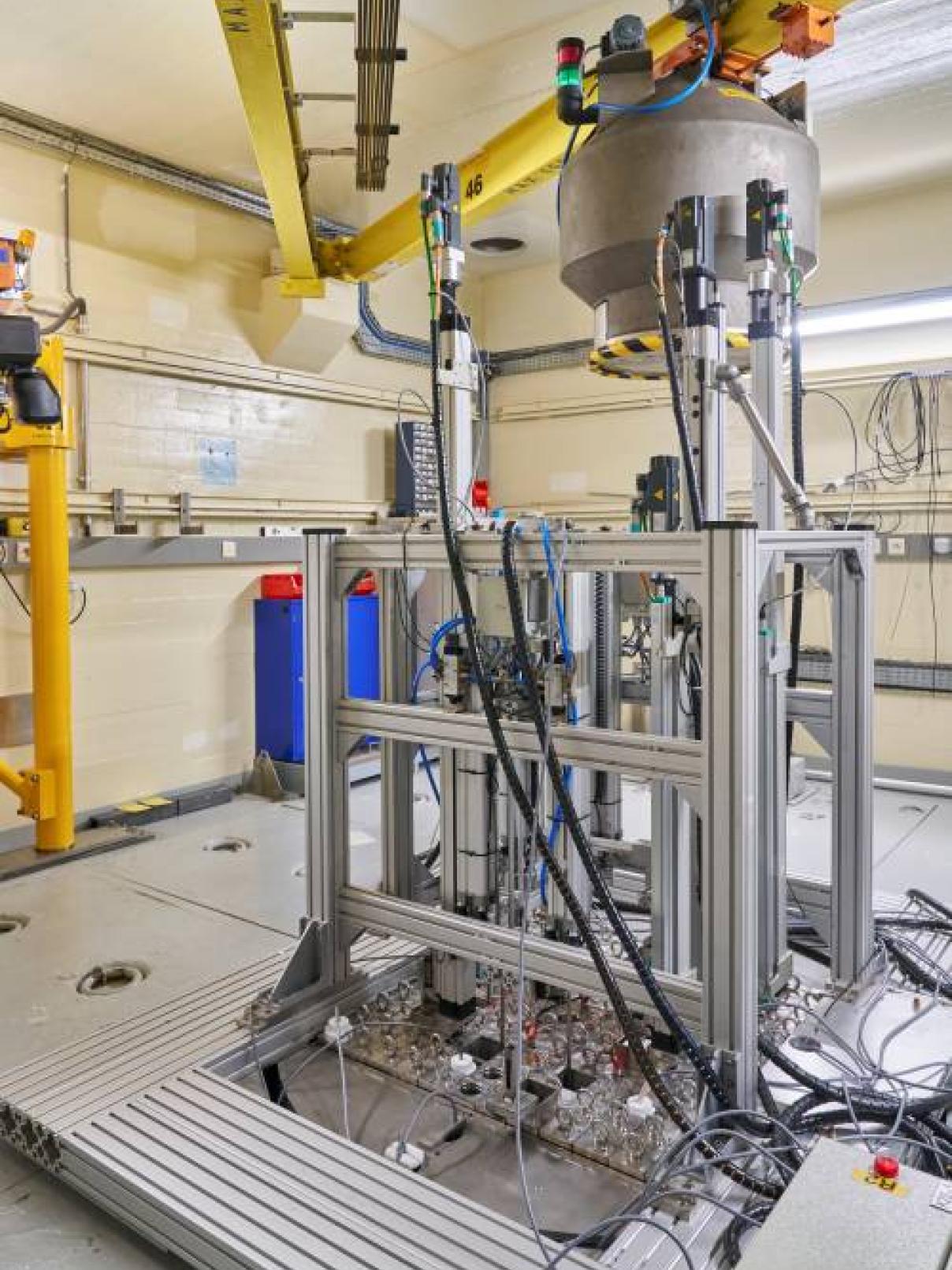
As part of this programme, experts from FANC, CNCAN and the IAEA recently visited several SCK CEN facilities. During the visit, they were also introduced to another key asset for LEANDREA: the VENUS zero-power reactor, a unique research infrastructure that SCK CEN has been using since 2011 to conduct experiments on fast reactor systems.
This head start in terms of both expertise and infrastructure, combined with the early engagement of nuclear regulators through the pre-licensing process, is expected to help accelerate the development of LEANDREA.
We are not starting from scratch
When developing a lead-cooled reactor, such as LEANDREA, experimental research plays a major role. It yields data on the behaviour of fast reactor systems and allows calculations, nuclear data and models to be tested. With VENUS, SCK CEN has the facility to carry out that work.
SCK CEN has been using VENUS for research into fast reactor systems since 2011. The history of the facility dates back to 1964. In 2007, SCK CEN decided to thoroughly overhaul VENUS into a flexible test facility for Accelerator Driven Systems (where a particle accelerator is coupled to a reactor) and innovative reactor systems, such as lead-cooled SMRs, among other applications.
Do not let the term 'zero-power reactor' mislead you. VENUS has a power output of around 500 watts, roughly half the power of an ordinary vacuum cleaner. Generating energy is therefore not the goal. The strength of VENUS lies in its experiments: researchers can study reactor physics, test calculations and collect data needed to develop new reactor systems.
This is used, among other things, to study neutron behaviour in fast reactor systems and to validate nuclear data and calculation models. The knowledge and experience that SCK CEN has built up over the years give it an advantage today in the development of LEANDREA.
Broader European benefits
The capabilities of VENUS extend beyond LEANDREA. The facility is deployed within the broader EU-SMR-LFR programme and is made available to other reactor developers and research organisations.
Zero-power reactors for fast reactor systems are not everyday infrastructure in Europe. Moreover, the facility alone is not enough: setting up relevant experiments, carrying out measurements and interpreting the results require specialised knowledge and experience. Therefore, anyone needing experimental data for the development of a fast reactor can make use of the capacity and expertise already available at SCK CEN, without having to build them up from scratch first.
In this way, VENUS can also support other European reactor projects. This fits within the broader European ambition to further develop independent nuclear technology and make energy supplies more robust and less dependent. New reactor developments can also benefit from deploying existing research infrastructure and nuclear expertise that are already available on a broader scale.


