
Research reactor BR1 celebrates its 70th anniversary
On 11 May 1956, Belgian Reactor 1, or BR1, was started up as Belgium’s first nuclear reactor. Today, seventy years later, it celebrates its anniversary. Over the years, BR1 has grown into a cornerstone of research infrastructure. What began as pioneering work in reactor and neutron physics has evolved into a versatile research facility, now used for the irradiation of electronic components, the calibration of nuclear measuring instruments, and the training of reactor operators.

To mark its 70th anniversary, we have compiled seven remarkable facts about BR1.
-

Built at lightning speed and featured in a Tintin comic
BR1 was built in just 18 months, which is exceptionally fast. Even so, Hergé was even quicker! In his Tintin comic Destination Moon, a cartoon version of BR1 appeared as early as 1953, before the reactor had even been completed.
-

Railway track and a small train
Inside the BR1 building, there is a railway track with a small train. This train is used to safely transport spent fuel rods between the reactor and the depository, and back again.
The rods are placed in a special container with no less than 23 cm of lead shielding.
-

Second oldest research reactor in the world
On 11 May 1956, BR1 reached criticality for the first time. This is the moment when a nuclear fission reaction becomes self-sustaining and balanced.
Seventy years later, the reactor is still operational. This earns it the title of the second oldest operating research reactor in the world.
-

Moderated by graphite and cooled by air
BR1 uses graphite as a moderator and is cooled by air, a rare combination that is now scarcely found anywhere in the world.
It is based on the very first nuclear reactor ever built, Chicago Pile-1 (CP-1), which also used graphite and natural uranium.
-
From pioneering work and medical radioisotopes to modern applications
In its early years, researchers mainly used BR1 for pioneering work in reactor and neutron physics, as well as for producing medical radioisotopes. This production role later shifted to the BR2 reactor, which is now among the world’s leading facilities for radioisotope production.
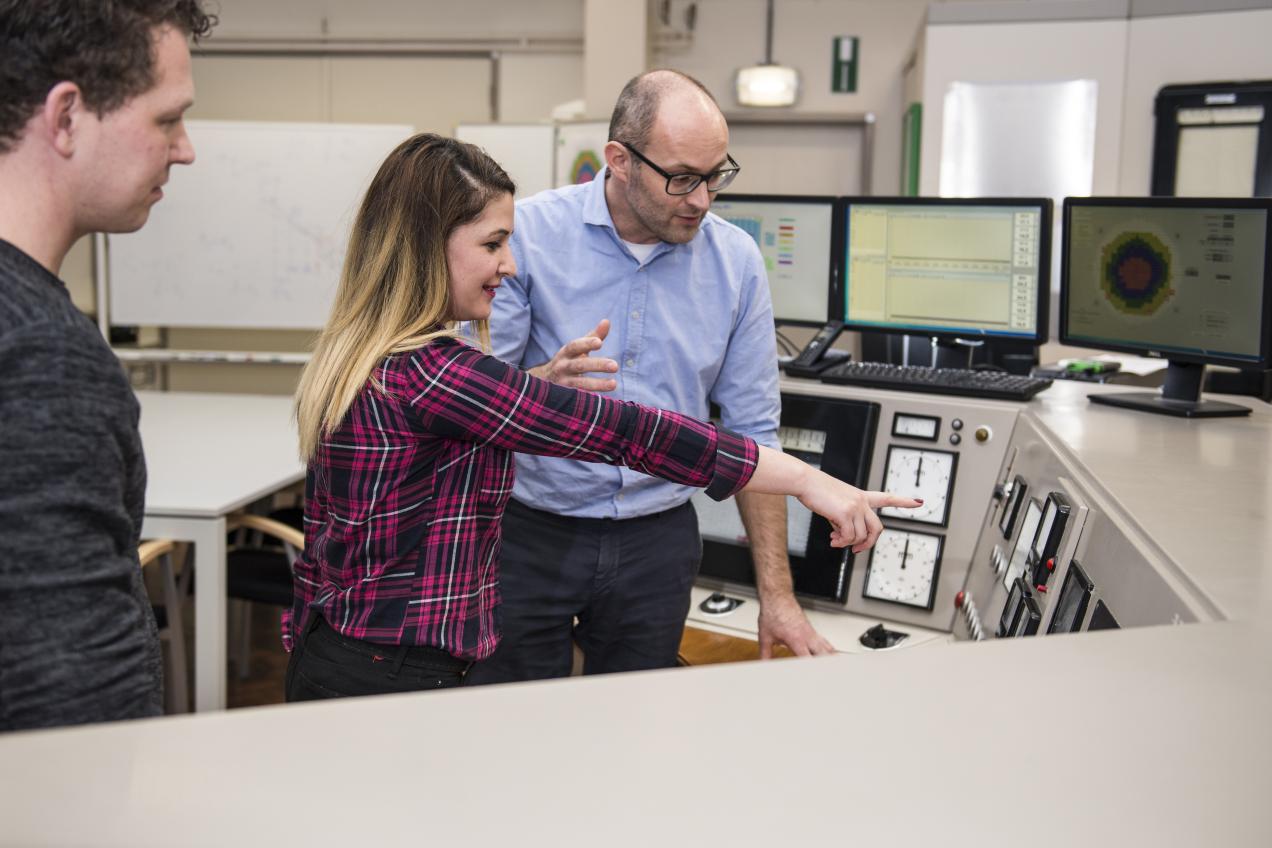
BR1 evolved in line with new research needs. Today, researchers use the reactor for the irradiation of electronic components, the calibration of nuclear measuring instruments, neutron activation analysis, and the training of tomorrow’s reactor operators.
-

Original fuel rods
Thanks to its low power, the reactor consumes very little fuel. The original fuel rods from 1956 are still in use today, and still nowhere near needing replacement.
-

No fewer than 14,500 graphite blocks
The core of BR1 consists of 14,500 graphite blocks. Carefully and manually stacked into a structure nearly seven meters high.


