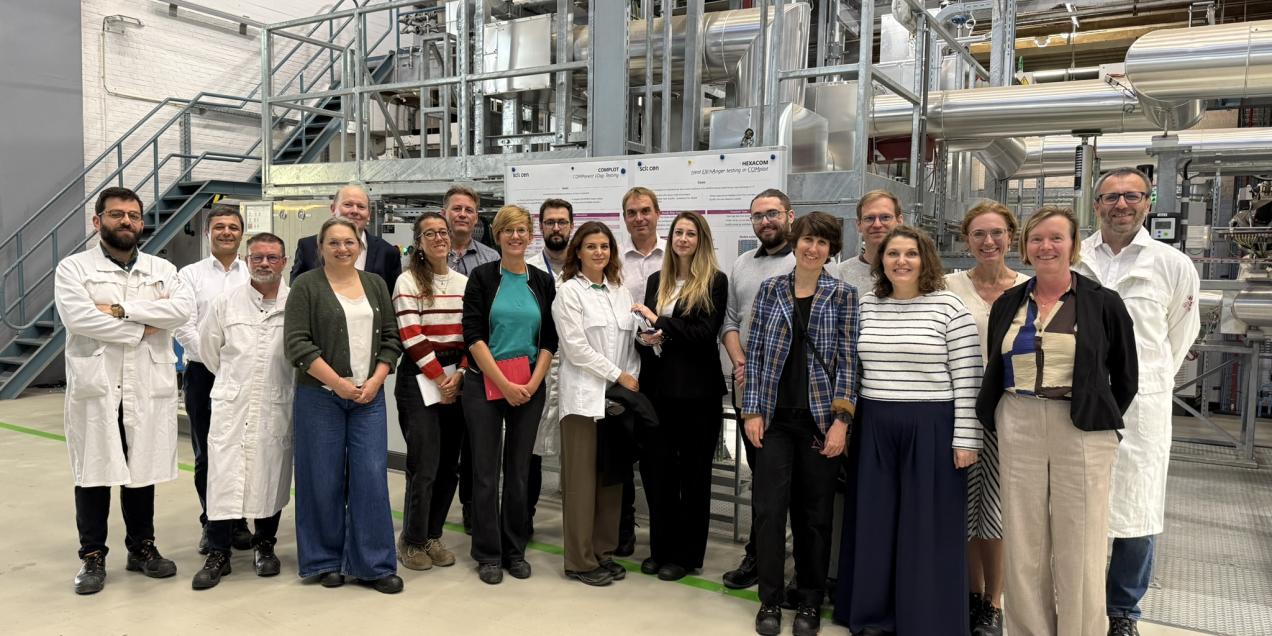
Partners in the lead-cooled SMR get together at side event to the IAEA General Conference
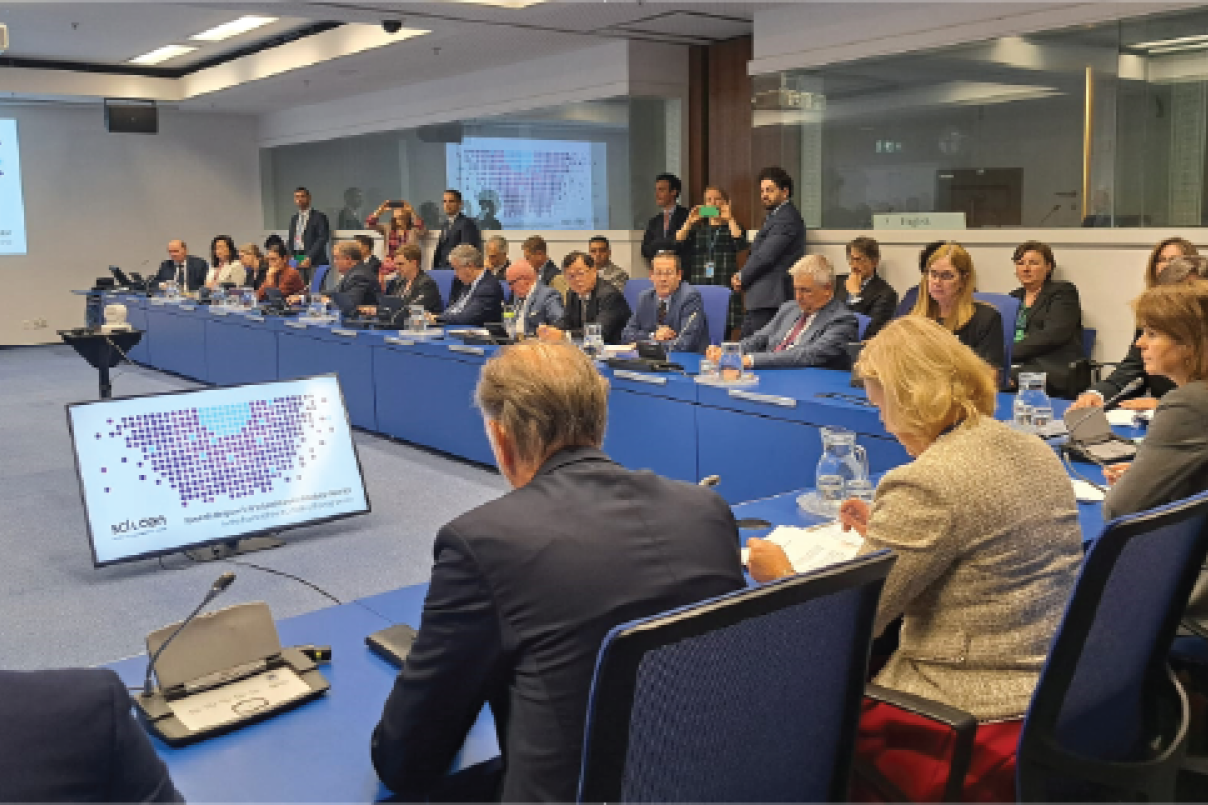
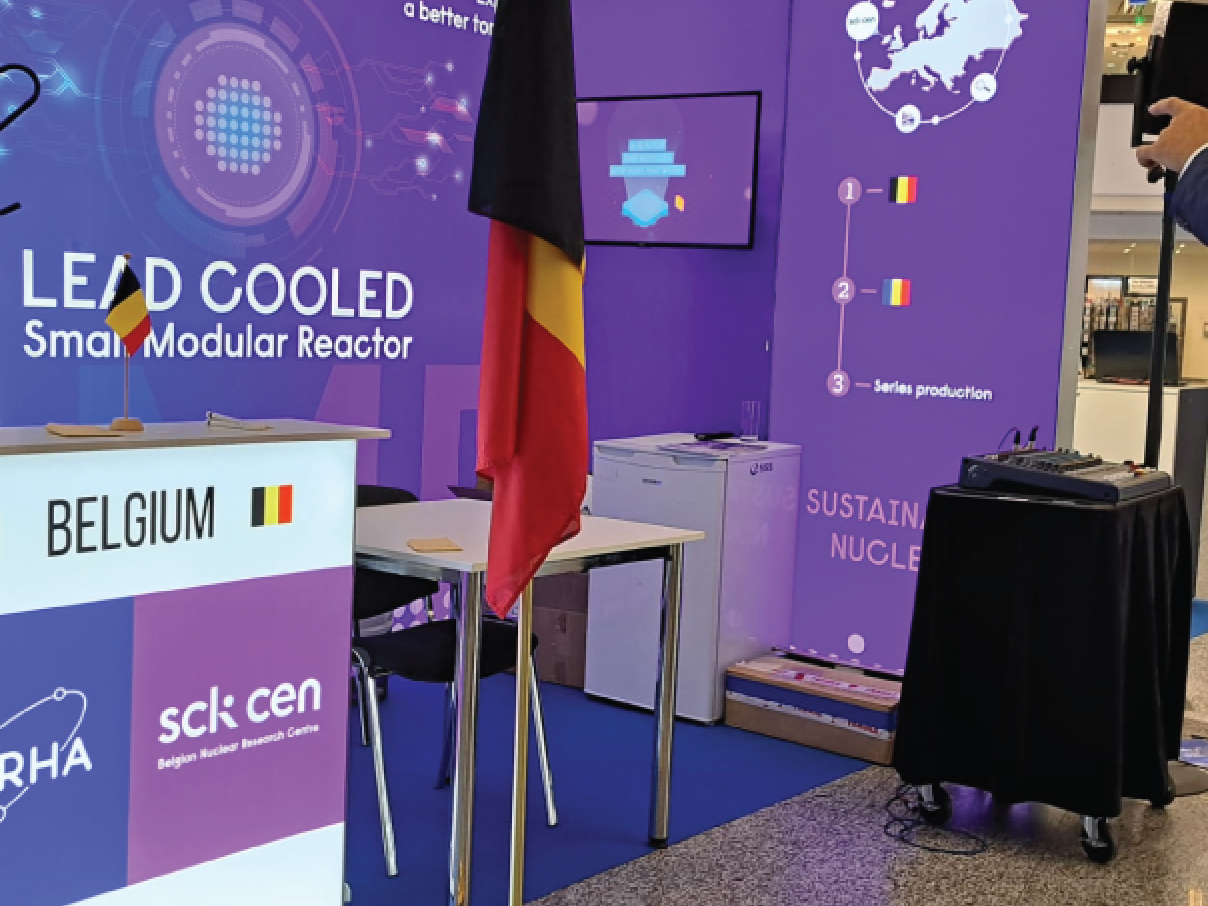
This week, the 68th IAEA 'General Conference' is being held at the Vienna Conference Centre. In addition to a Belgian booth, in which SMR-LFR (lead-cooled, fast SMR) was one of the hot topics, Belgium also organised a side event on 17 September for the policymakers in attendance. The event once again underlined the importance of a European partnership that brings together research expertise and industrial know-how. The four partners wishing to form a consortium together, namely Ansaldo Nucleare, ENEA, Raten and SCK CEN were present and took the floor during the event. Their ambition is to sign a binding agreement by the end of the year.
Changed consortium, unchanged resolve
The SMR-LFR project recently became entirely European in focus, after Westinghouse stepped aside to concentrate more closely on its water-cooled projects. Though this has changed the possible composition of the consortium, the shared vision regarding the commercial roll-out of small modular reactors based on lead-cooled, fast reactor technology remains unchanged. In the meantime, a binding agreement still forms the next step in the project and discussions about that are ongoing.
As an industrial partner, Ansaldo Nucleare will take over the role of ‘lead engineer’. Ansaldo has already developed considerable knowledge in the field of reactor engineering, both for water reactors as well as for innovative designs and advanced technologies. The strength of the consortium will therefore be retained: a fusion of Ansaldo Nucleare's industrial know-how and the liquid metals expertise provided by ENEA from Italy, the Romanian research institution RATEN and the Belgian research centre SCK CEN.
Read more about the SMR-LFR project here
European Industrial Alliance on Small Modular Reactors
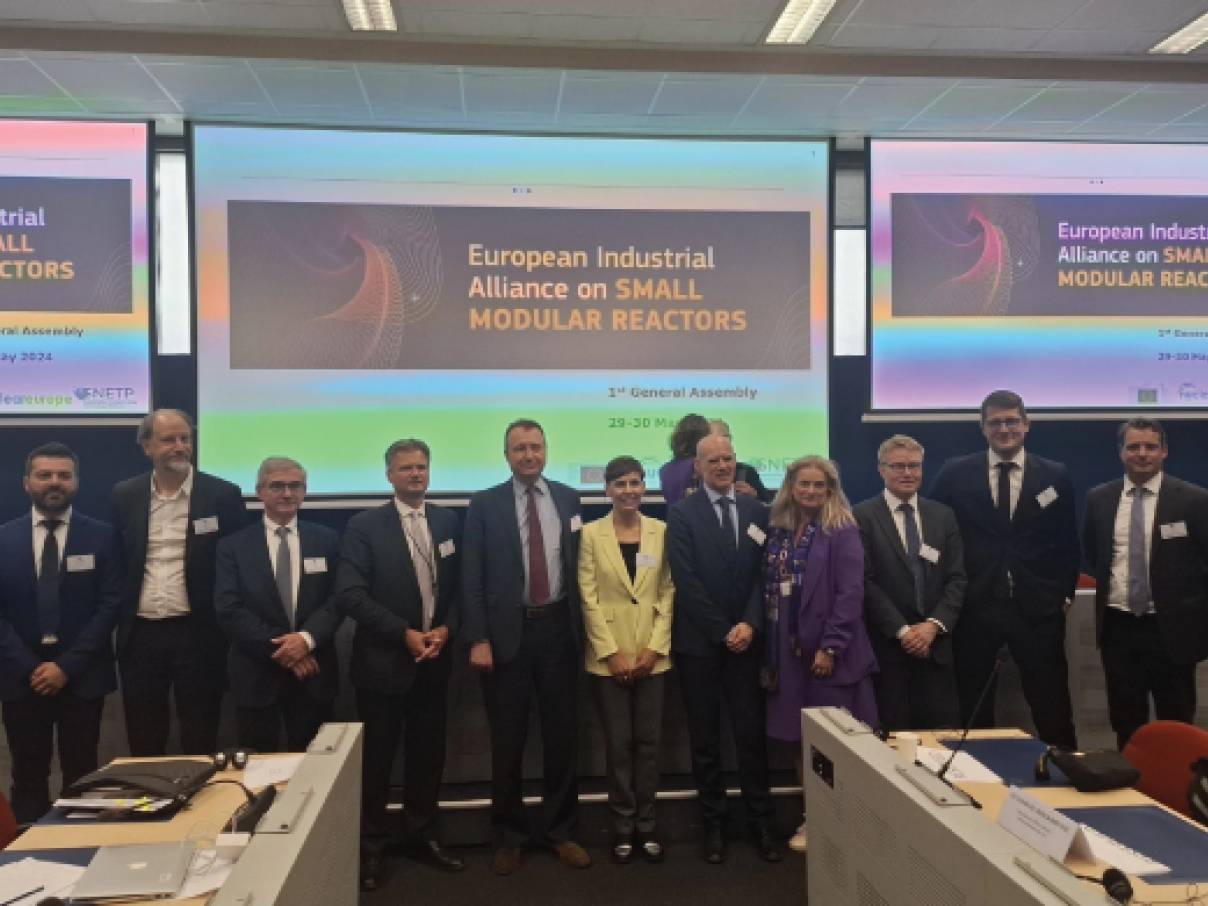
The European Industrial Alliance on Small Modular Reactors is an initiative of the European Commission to support and facilitate the implementation of SMRs, including advanced SMRs (or AMRs) within Europe. All of the activities of the Alliance are aimed at accelerating the roll-out of specific SMR projects on the European market. To that end, the Alliance is creating a collaborative platform and by means of specific working groups, is working to improve the conditions for the development, demonstration and deployment of SMRs.
Specifically, the Alliance hopes that the first projects will be operational in the first half of the 2030s – or maybe even sooner – so that SMRs can help to drive down greenhouse gas emissions in Europe. The most promising, safe and cost-effective SMR technologies are eligible for support from the Alliance.
SCK CEN joined the European Industrial Alliance on SMR in order to promote the joint project based on the SMR-LFR technology. The project is in the running to be selected. However, SCK CEN has already been designated as chair of the working group that deals with ‘Technology & R&D&I’ of all SMR projects and it also sits on the Governing Board of the Alliance.
68th General Conference of the IAEA
This week, the 68th General Conference of the International Atomic Energy Agency (IAEA) is being held at the Vienna Conference Centre. Representatives of the IAEA's 178 Member States will meet at the organisation's headquarters in Vienna. This year, the Belgian pavilion there is dedicated to heavy metals. Along with MYRRHA, the lead-cooled SMR is the principal topic there.
Side event: Towards the first Belgian SMR-LFR
Ambassador Caroline Vermeulen, along with Peter Baeten, opened the event and welcomed attendees. Roberto Adinolfi, the president of industrial partner Ansaldo Nucleare, then took everyone through the overarching cooperation framework for the development and deployment of SMR-LFR technology in Europe. He outlined the road map for the commercial roll-out of lead-cooled SMRs, which defines the key steps and milestones for the industrial implementation of SMR-LFRs in Europe. He also highlighted the role of lead-cooled SMRs within the European energy transition and explained how nuclear power is repositioning itself as an indispensable component within a sustainable energy supply. He also spoke about the joint European approach towards the development of these advanced SMRs.
Marc Schyns (SCK CEN, Belgium), Catalin Duku (Raten, Romania) and Mariano Tarantino (Enea, Italy) then took the floor one by one and gave an update on the progress and developments within the SMR-LFR programmes of Belgium, Romania and Italy.
To conclude, an interactive panel discussion took place between the nuclear regulators of Belgium, Romania and also with an IAEA representative on the perspectives regarding the 'pre-licensing' phase of SMR-LFRs at national and international level.