Introducing RADAR: a brand new, highly versatile 3D ALARA software
The nuclear industry is often misunderstood. Nuclear energy and other applications are seen as dangerous and harmful, fully negating any and all potential benefits. The risks are seen as much too great. Some of the assumptions aren’t wrong. Nuclear applications are varied, but all of them carry risks. It’s the job of organisations like SCK CEN to make sure we understand these risks and know how to tackle them safely. That’s exactly why we’ve developed RADAR. A brand-new tool to help people across this sector analyse, calculate, and visualise radiological areas of operation, calculate the exact radiation dose received by people, and determine the safest way of working.


RADAR and ANUBIS
Initially conceptualised as part of the ANUBIS project, RADAR began as a tool for decommissioning and decontaminating nuclear installations. However, the tool soon expanded in scope, and today RADAR is without a doubt the single most versatile ALARA tool on the market. RADAR creators Pasquale Lombardo, PhD, and Mahmoud Abdelrahman, PhD, envisioned a modern ALARA tool that accurately calculates dosage in complex, changing environments, with a user-friendly interface and a versatile backend that can quickly evaluate multiple scenarios.
Just a few clicks
One of the most significant challenges in RADAR’s design was to keep the user interface simple and intuitive without reducing the software’s capabilities. To that end, Pasquale and Mahmoud chose to work in Unity Engine, a commercially available game engine. This platform is the perfect fit for the kind of 3D interactivity RADAR offers its users, while also providing the depth needed for a modern ALARA tool that includes dynamic shielding, complex source geometries, and simulated workflows and routes.
Users can replicate the environment, specify shielding material, indicate radiation source(s), and their exact radioisotope and strength, within a few clicks. But the set-up time can be lowered even further by uploading CAD drawings, 3D scans, and LIDAR scans.
On top of that, RADAR allows for easy setup of dynamic human avatars that mirror how personnel move through a radiological workspace. These avatars follow realistic, timed routines and visualise dose accumulation during the operation.
The result is a tool that lets users create, adjust, and compare scenes in minutes. Scenarios and simulations can be changed and iterated upon to find the safest approach quickly and efficiently.
A radiological Swiss-Army-Knife
RADAR’s unique interface and versatile backend make it the Swiss-Army-Knife of ALARA tools. The modular design and flexible capabilities mean RADAR could be used for everything from decommissioning to VR-training to building full digital twins.


Several RADAR simulations that clearly illustrate different use cases
- Medical shielding
- Digital twin
- Training, VR simulation included
- Decomissioning
- Rapportage en output
What’s more, the application supports your project at every stage of the process. The software can generate graphs, maps, detailed 3-D renders, and more. All the outputs needed for permit applications, procedural planning, stakeholder communication, and much more.
Real-world comparisons
Aside from ease-of-use and versatility, RADAR also sets new standards when it comes to accuracy. When speed is most important, simulations can be run in real-time with fast point-kernel-based calculations. However, the system is also capable of running full Monte Carlo simulations, backed by the Geant4 database. Monte Carlo is computationally intensive, but recent innovations have significantly improved efficiency. RADAR runs Monte Carlo calculations in hours, not days- and all right from your laptop.
RADAR builds every calculation on internationally recognised standards - but SCK CEN didn’t stop there. Many other ALARA tools base their measurements and dose estimates on literature or other software. RADAR’s results were validated against real measurements in SCK CEN’s own calibration facility, using fully characterised sources and precisely controlled setups. With RADAR, you get estimates you can rely on - accurate, defensible, and backed by decades of expertise. Win, win, win.
Do you want to make your radiological operations faster, safer, and more cost-effective?
Meet the designers
-

Pasquale Lombardo
Pasquale Lombardo, PhD, is a nuclear engineer and researcher at SCK CEN who specialises in computational dosimetry. His main focus is radiation protection, dosimetry, and digital twins. He is an enthusiast of new technologies and not afraid to think outside of the radiological box, so to speak.
-
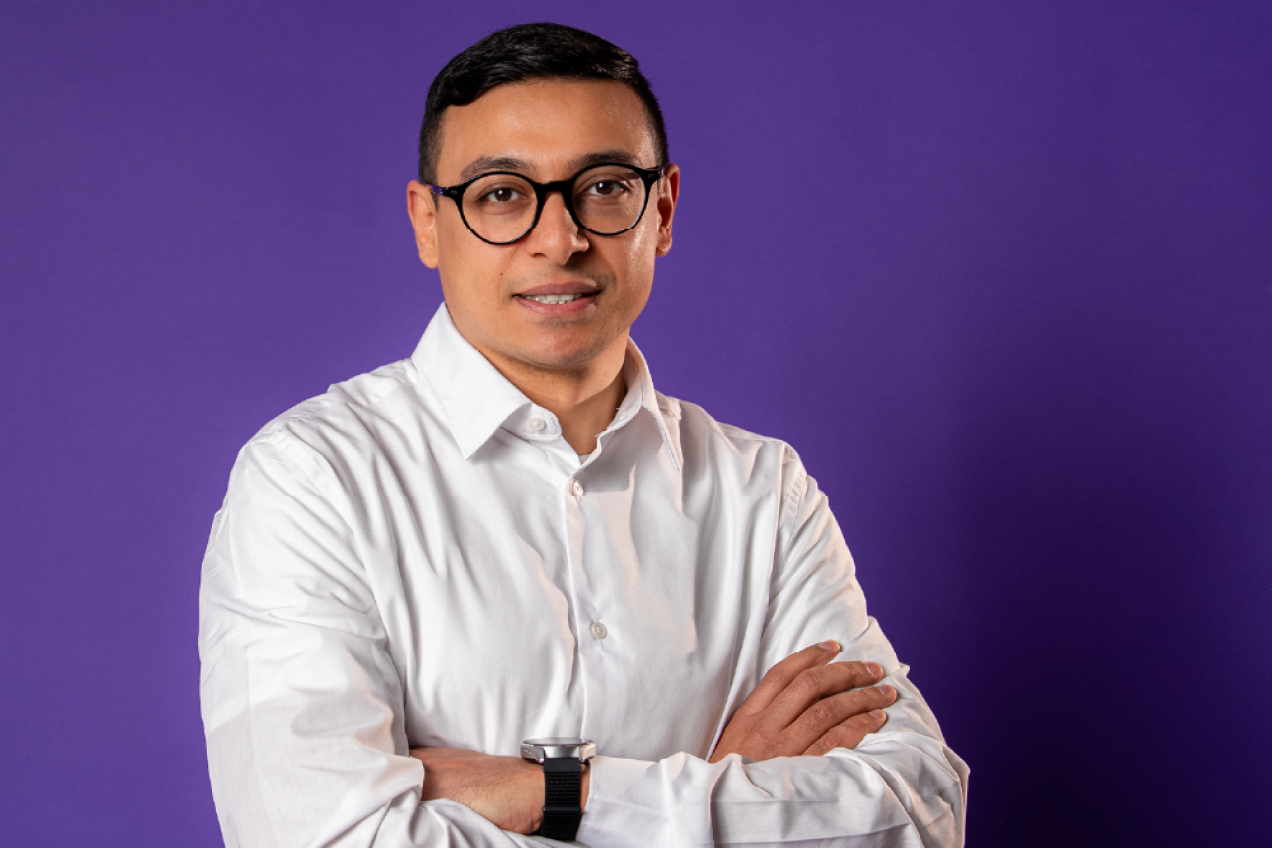
Mahmoud Abdelrahman
Mahmoud Abdelrahman, PhD, is a nuclear engineer and computational dosimetry expert at SCK CEN and the WP7 leader of the ANUBIS project. His work focuses on radiation transport modelling, digital twins, and computational methods that support safer, smarter, and more efficient radiological operations.
-
ANUBIS & the relaunch plan for Belgium and Europe
Let’s rewind to 2021. At that time, the European Union awarded SCK CEN funding for the ANUBIS project, which stands for "Advancing NUclear dismantling in Belgium through Improving Sustainability". The main goal of the project is to develop technologies and competencies to maximize the reuse of materials released during nuclear decommissioning. This includes the construction of a new research, development, and demonstration facility with associated facilities for supporting innovation in dismantling projects in Belgium.
The project not only fits in with the Belgian European plan for the economic recovery from the COVID-19 pandemic, but it also connects seamlessly with the sustainable dismantling of the five nuclear power plants at Doel and Tihange. "And we are not alone," said An Bielen, who is leading the ANUBIS project at SCK CEN. "We are already joining forces with four partners in the private sector.”
💡 Do you want to know more about ANUBIS? Click here.