Belgian nuclear experts support Latvia in cleanup of historically contaminated site
Site remediation leads the way to new industrial zone
Liepãja, a city on the west coast of Latvia, is taking steps towards a sustainable future by transforming the former Liepãja Metalurgs steel factory into an environmentally friendly industrial zone. Before this transformation take place, remediation of soil and groundwater is required to address historical contamination. Belgian expertise plays a crucial role in this cleanup, with the Belgian nuclear research centre SCK CEN leading a research project.

Liepāja's plans include the development of an innovative industrial park on a 120-hectare site. However, localized radioactive contamination, affecting only a small part of this vast area, as well as other pollutants such as fuel oil and heavy metals, must be addressed before redevelopment can proceed safely. The city is drawing on European funds, with additional support from Belgian experts, to tackle this complex challenge.
Belgian consortium
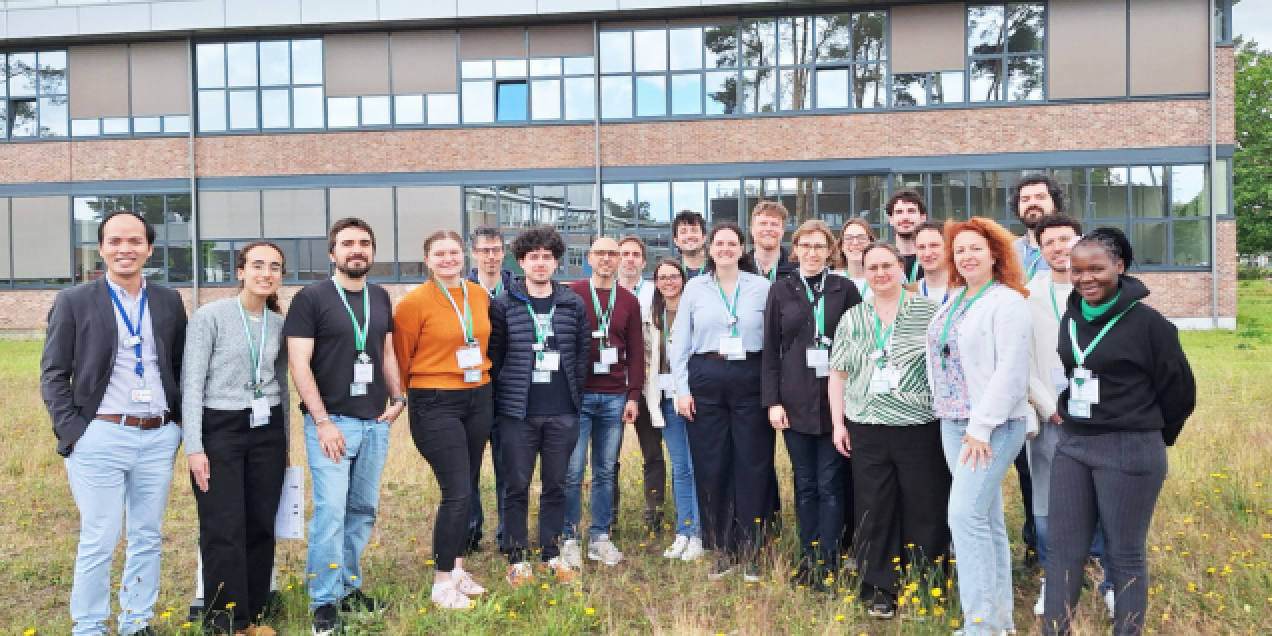
A Belgian consortium, comprising SCK CEN, Tractebel, IRE, and Belgoprocess, provides both expertise and technical resources on the radiological aspects. The project was awarded by the Belgian Federal Public Service (FPS) Economy supporting nuclear safety in Central and Eastern Europe. It is part of a European program for international cooperation in nuclear safety. The project in 2024 builds on two previous projects that were carried out in 2021 and 2022 under the leadership of IRE.

Chemical and radiological cleanup as a priority
The main goal of the Belgian consortium during 2024 is to map the radiological contamination and to assess the soil contamination through geostatistical analysis.
SCK CEN, leading the technical execution, conducted an extensive measurement campaign in August 2024 in collaboration with IRE. SCK CEN performed surface and depth measurements in areas identified as having increased radiological contamination, while IRE conducted supplementary gamma-spectroscopic analyses.
"We used advanced in-situ detection systems calibrated to measure radioactive substances such as cesium-137 in the soil," explains Johan Camps, characterization expert at SCK CEN.
Following these measurements, Belgoprocess and Tractebel are analysing the data further. Belgoprocess conducts a first 2D geostatistical analysis to map the distribution of contamination in the upper and lower soil layers, while Tractebel will conduct a more extended 3D analysis.
This collaborative effort, in-situ characterization campaign together with the geostatistical analysis, enables the team to accurately analyse radiological contamination across various soil layers, both in terms of extent and depth. Such efforts are crucial for precisely determining the contamination’s scope and proposing a cost-optimized remediation solution for the site in the future.

Collaboration between Belgian and Latvian authorities
Measurement results will be reported to local Latvian safety authorities, including the Liepāja Special Economic Zone (LSEZ), which oversees the redevelopment of the contaminated site into an industrial park. In these reports, the Belgian consortium will provide recommendations for possible remediation scenarios, ranging from brownfield to greenfield rehabilitation.
“The project demonstrates how cross-border collaboration is crucial in tackling complex challenges such as cleaning up contaminated industrial sites. Latvia and Belgium are working together towards a safe and sustainable solution, which will ultimately benefit not only the local community but also the wider region” says Vanessa Montoya, project leader and coordinator at SCK CEN.
What does brownfield-to-greenfield scenarios mean in a site remediation strategy?
Brownfield-to-greenfield scenarios in site remediation refer to different transformations of previously developed contaminated land into a clean, usable site.
- Brownfield scenarios often involve assessing existing contamination and potential redevelopment options, focusing on risk reduction through remediation and institutional monitoring/controls.
- In contrast, greenfield scenarios emphasize establishing baseline contamination conditions and assessing potential future uses to prevent exposure to any residual contamination.
Both scenarios require thorough scientific analysis of multiple data, stakeholder engagement, and compliance with regulatory frameworks to ensure public health and environmental safety. These approaches aim to cost-effectively revitalize contaminated properties while safeguarding community health and the environment.