
Radioligand therapy (RLT)
Targeted cancer treatment improves quality of life
According to predictions, cancer will be the most common cause of death in Europe by 2036. There is therefore a substantial need for early diagnosis and more efficient treatments. Radioligand therapy is a promising development in this area. In cancer treatment, a carrier molecule delivers a radioactive isotope directly to the tumour and/or metastases. The cancer cells are then attacked with extreme precision, while the healthy tissue surrounding them is largely avoided. For the patient, this means fewer side effects and a better quality of life.
How does it work?
A radioactive substance – a radioisotope – is injected into the bloodstream. This radioisotope attaches to a specially designed carrier molecule, which navigates directly to a tumour and any metastases.
You can compare the carrier molecule to a car with razor-sharp GPS and a fully loaded trailer. How does this GPS work? Cancer cells – for example, prostate cancer cells – have more specific proteins on their cell surface than healthy cells. These are like landmarks which the carrier molecule can attach itself to.
Once attached, the radioisotope starts to irradiate the cancer cells with precision. This damages the cancer cells, causing them to die off and the tumour to shrink. The healthy tissue is spared as much as possible. As a result, the patient experiences fewer side effects and therefore enjoys a better quality of life.

What do you need?
To provide radioligand therapy, we need three components:
- a radioisotope to irradiate the cancer cell
- a carrier molecule to reach the cancer cell
- and a chelator – the 'trailer' that connects the first two components.
What role does SCK CEN play?
Radioligand therapy can significantly increase the life expectancy and quality of life of patients. However, the supply chain is still fragile and the biological mechanisms behind it are still unknown. SCK CEN wants to help change that.
SCK CEN is boosting the fight against cancer by ...
-
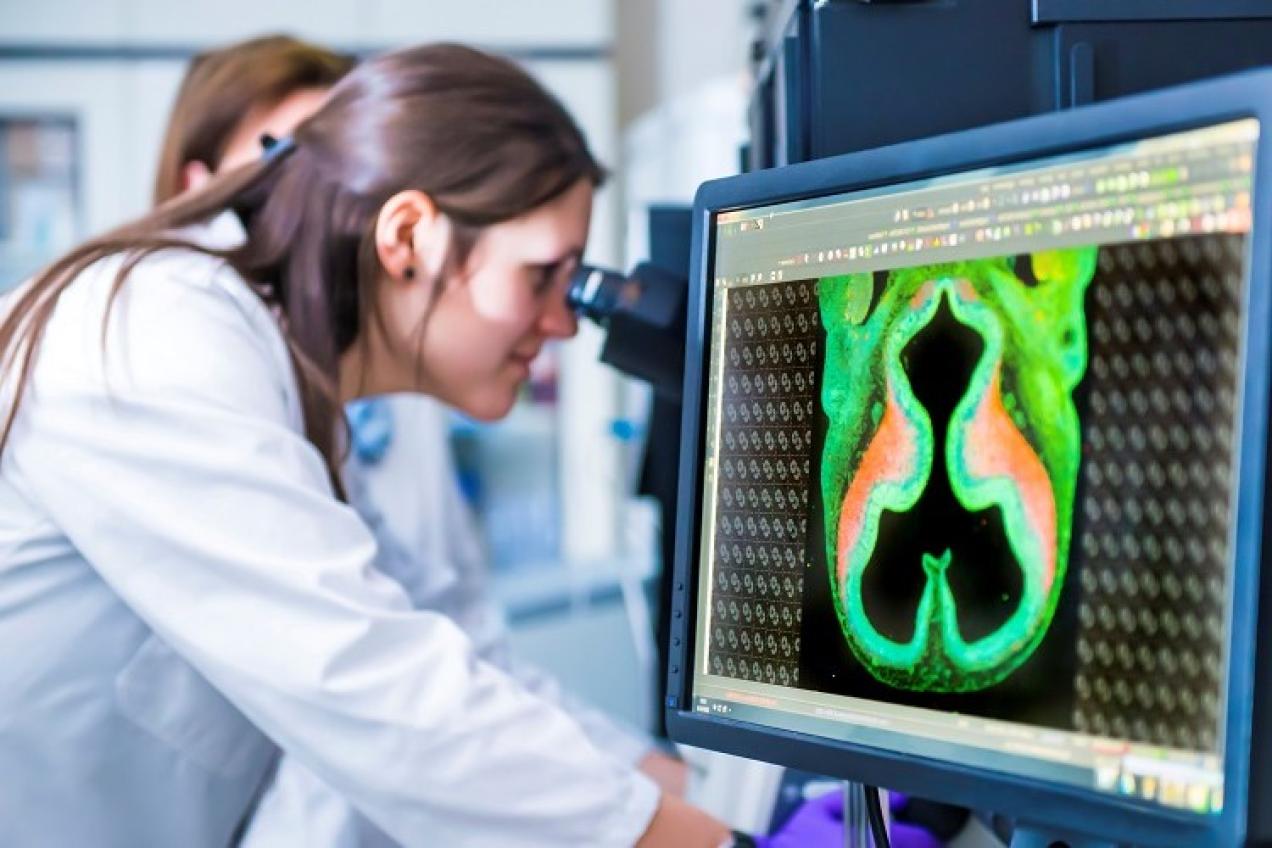
1. Conducting preclinical research
-

2. Boosting the production chain
-

3. By engaging in dialogue
Patient Francis Ligot's testimonial*
Our work provides great value to patients such as Francis Ligot*. He underwent two courses of radioligand therapy with lutetium-177: "I had pancreatic cancer with metastases in the liver. When all the other treatment options had been tried, radioligand therapy was suggested. I really appreciate all the efforts made by research centres, such as SCK CEN, who are investing in the development of radioligand therapy to make the treatment widely accessible. I felt hardly any discomfort from the treatment and I got several wonderful extra years of life in return. Because believe me, nothing is more precious than life itself."
*Francis passed away on 27 May 2025, more than 12 years after his initial cancer diagnosis. We are grateful to him for sharing his story so courageously with the world. Those who have heard his testimonial often think back on it – his words continue to motivate people years later.
What other cancer treatments are available?
Radioligand therapy is just one of six possible pillars in the fight against cancer. We need all of them to treat cancer as effectively as possible.
The other 5 pillars are:
-
External radiotherapy, or irradiation, is the most common cancer treatment. The doctor adjusts the radiation device with high-energy particles or waves to the affected area in your body to destroy or damage cancer cells.
SCK CEN has extensive expertise in studying the biological effects of radiation on the body.
-
Some tumours need hormones to grow. Hormonal therapy inhibits or blocks the action of hormones and/or causes the body to produce fewer hormones. That means the cancerous cells do not survive as well, or die off.
This therapy does not use ionising radiation.
-
Surgery can only provide a cure if there are no metastases. The doctor cuts away the tumour and the tissue around it. As a result, all the cancerous cells are more likely to be removed. Has the cancer metastasised nonetheless? Then an operation can only reduce the complaints.
This therapy does not use ionising radiation.
-
Immunotherapy is a treatment with medicine that helps the natural immune system to recognise and destroy cancerous cells. The therapy does not act directly on the tumour, like chemotherapy, but helps your body to clear the cancer cells itself.
This therapy does not use ionising radiation.
-
Chemotherapy is treatment with medicine that kills cancerous cells or inhibits cell division. The medicines spread through the body via the blood, reaching almost all places with cancerous cells.
This therapy does not use ionising radiation.