
News

Measuring down to the smallest dose: gamma spectrometry enhances precision in radioligand therapy
New calibration service under development
Research into radioligand therapy requires results that are both accurate and easily comparable. But how can you reduce measurement uncertainty, especially at low doses? SCK CEN – together with its international partners – aims to answer that question by determining the activity using gamma spectrometry. This technique identifies radionuclides by their unique fingerprint. Meanwhile, the consortium has successfully completed two important experiments: one involving lutetium-177 and one carried out using actinium-225. These experiments represent an important step in the Precision Dosimetry Imaging Biomarker (PDIB) project, the intention of which is to develop a new, globally standardised calibration method.

Summit calls for radioligand therapy to be a key part in Belgian Cancer Plan
By 2035, ten to fifteen times more cancer patients will be eligible for radioligand therapy (RLT). Today, policymakers, clinicians and experts are gathering at the “Scaling up nuclear medicine” summit to address the question: “What steps must we take to ensure these patients are not left out?” The ambition is to embed RLT in Belgian cancer policy, prepare our healthcare system for the wide-scale deployment of RLT and position Belgium as an international pioneer.
Production of BR2 research reactor helps 13 million patients
SCK CEN breaks own production record in 2025
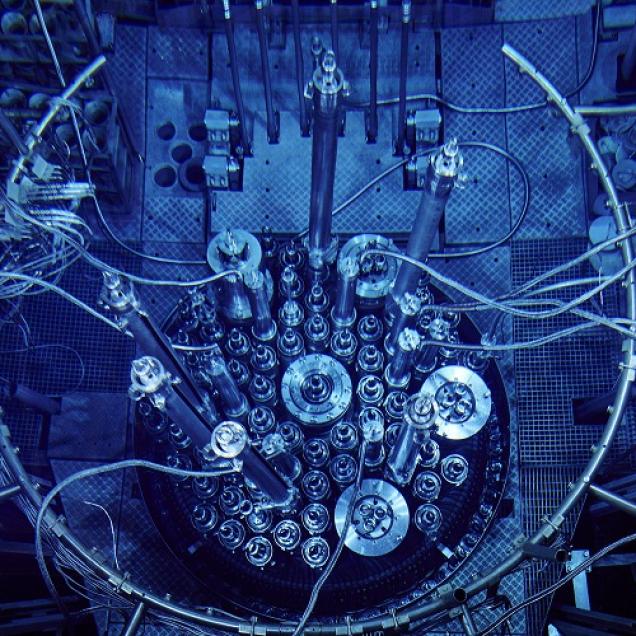
Every year, millions of patients rely on the medical radioisotopes produced by the nuclear research centre SCK CEN in its BR2 research reactor. In 2025, this figure increased to 13 millions. "This marks a new production record in the history of BR2," says Steven Van Dyck, BR2 director at SCK CEN. "And we can still scale up depending on medical needs."


