
'Not everything that comes from dismantling is necessarily radioactive waste'
SCK CEN attracts international attention with cutting-edge techniques for a circular approach to dismantling
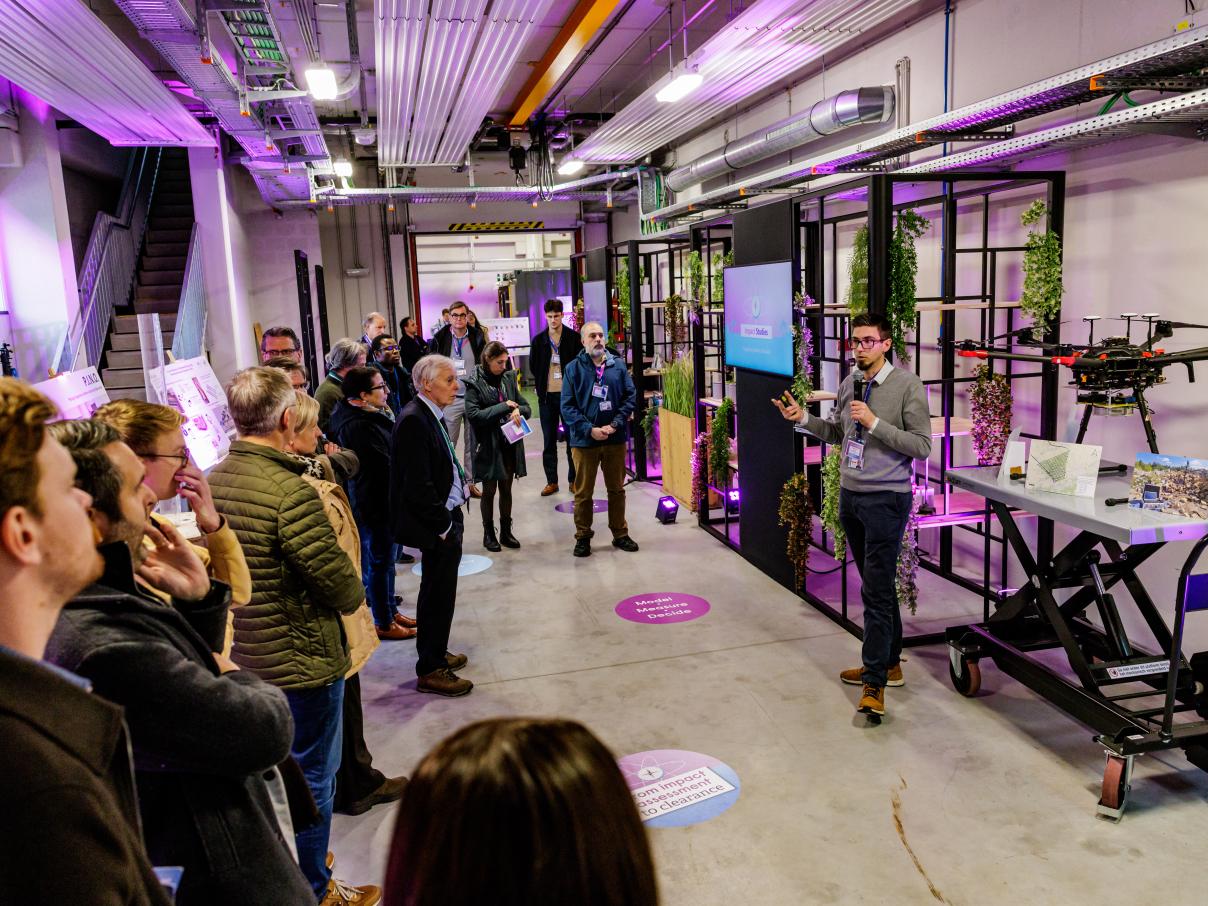
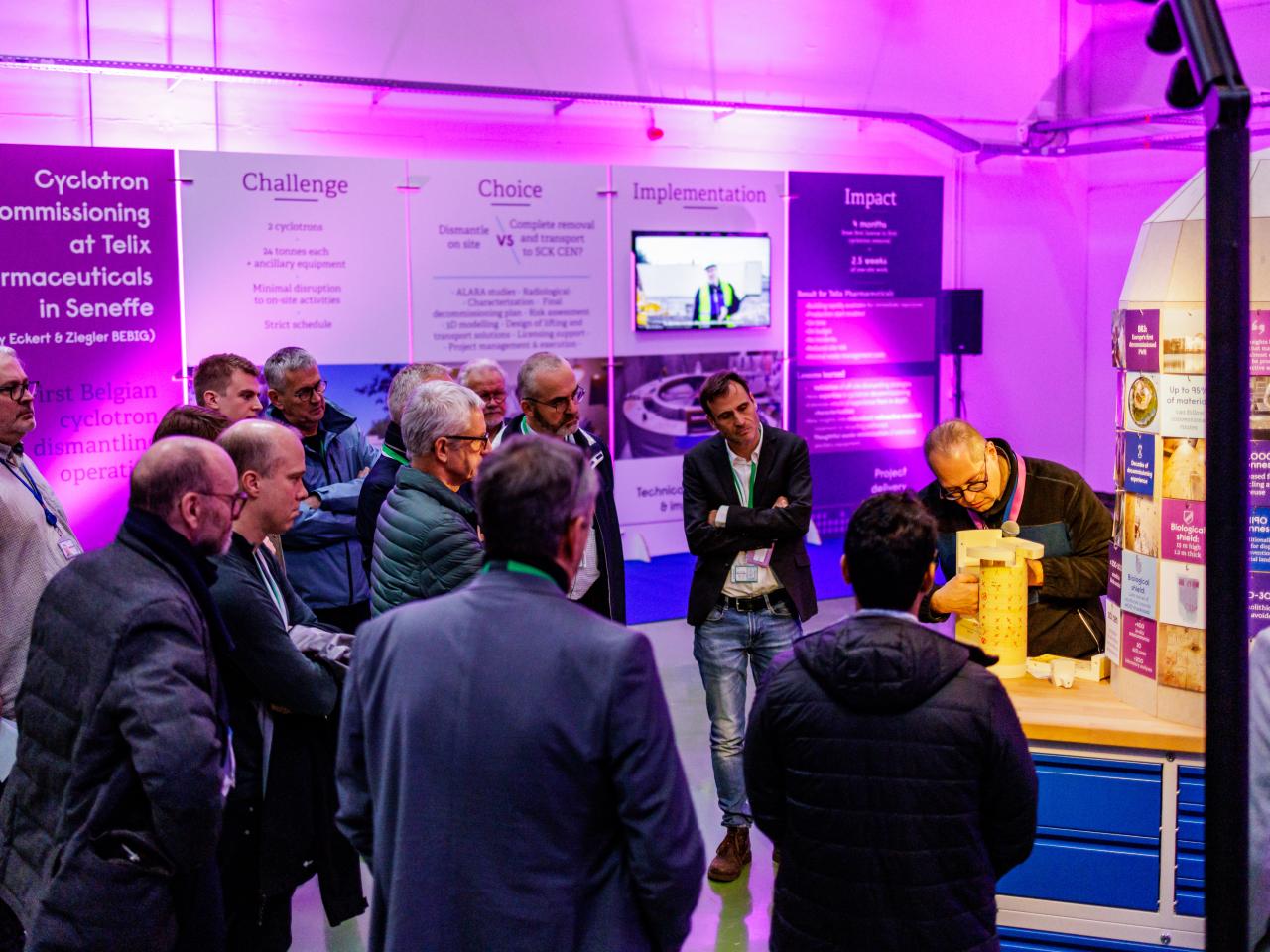
Today, more than 70 industry, policy and research representatives looked over the shoulder of SCK CEN’s dismantling experts. There, experts demonstrated the measurement and other techniques that enable the reuse and recycling of materials during the dismantling of nuclear facilities.
The circular economy has become firmly embedded. We write on recycled paper, drink from recycled bottles and will soon be eating farmed Norwegian salmon raised on poultry by-products. Keeping materials in circulation shrinks the waste mountain and reduces demand for new, scarce raw materials. Belgium is not only one of Europe’s leaders in recycling plastic packaging, but also an international model for the circular economy in dismantling.
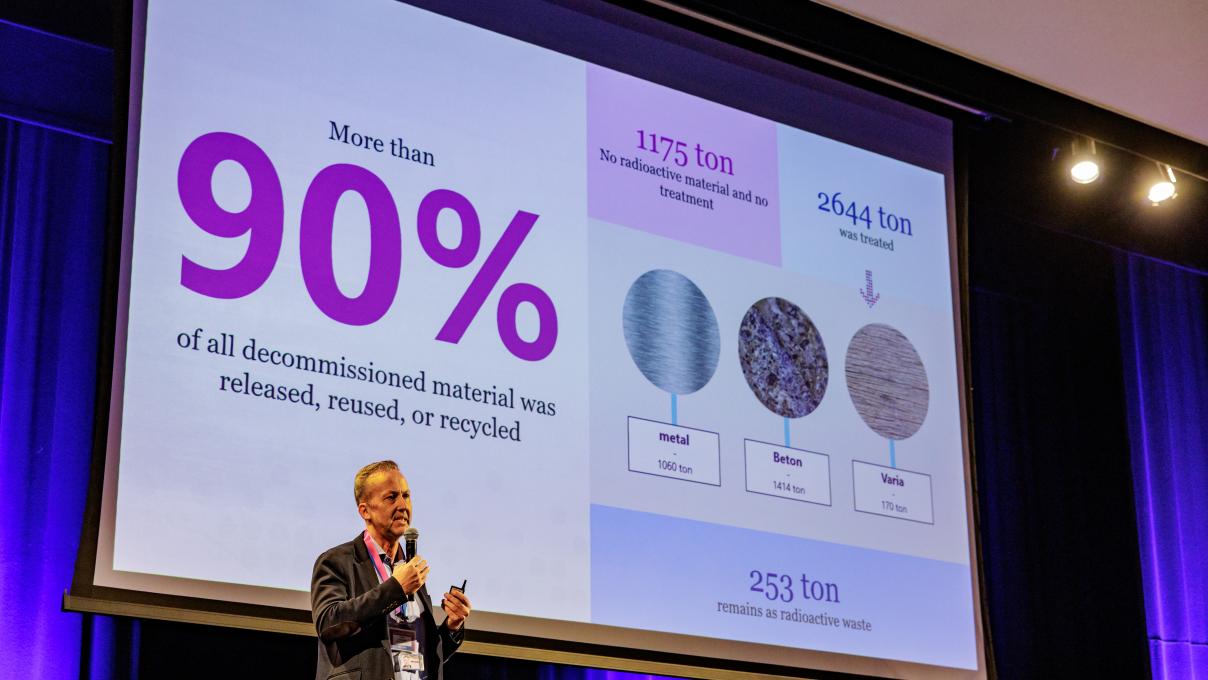
“Europe faces the decommissioning of an estimated 100 nuclear reactors and 200 medical cyclotrons by 2045. This will generate large and diverse material streams that need processing,” explains Didier Léonard, Institute Director for Sustainable Waste Management & Decommissioning at SCK CEN. “It is often mistakenly believed that virtually all of this material must be disposed of as radioactive waste. In reality, more than 90% of the material is not radioactive waste. That is why, under the ANUBIS project, we invested not only in dismantling technologies, but also in techniques to map dismantled material in detail. The more effectively we do this, the better we can identify which materials are eligible for a second life.”
Time savings
Thanks in part to investments from the Belgian-European Recovery and Resilience Plan, SCK CEN is now equipped with ‘Material Treatment (MaT)’. Spanning an impressive 1,440 m², the workshop houses the very latest technologies for the characterisation, treatment and release of materials. Today, those techniques were presented for the first time to more than 70 industry, policy and research representatives.
Specifically, this includes facilities such as:
-
These two measuring instruments check materials for release. This means that, following a final check, those materials are no longer officially classified as radioactive waste, clearing the way for reuse. E.R.N.I.E. is designed to measure 200-litre drums and is equipped with 10 detectors for this purpose. B.E.R.T. is E.R.N.I.E.’s big brother. Using its 24 detectors, it scans containers of up to 1 m³. Both instruments get the job done in one minute, whereas traditional measuring instruments take thirty times as long. Higher speed often comes at the expense of accuracy, but not here. This is made possible by the use of a digital copy (a ‘digital twin’) and machine learning techniques, which support and optimise the interpretation of measurement data. This was developed in collaboration with Ludlum GmbH.
-
Dismantling experts must also prove that the building, from floor to ceiling, meets the release criteria. They map the building using portable measuring instruments. With O.S.C.A.R., they can rely on a smart add-on for these instruments that automatically uploads results to a database and links them to a precise location. This eliminates manual recording, delivering significant time savings and minimising the risk of human error. This add-on was developed in collaboration with Magics Technologies.
Iterative measurement process
Some materials initially contain too much radioactivity to be released immediately. Through targeted treatment, experts can significantly reduce that level. To this end, they employ techniques such as cutting, sandblasting and metal melting. SCK CEN also recently completed a successful test of its SMELD furnace. Through comparative studies, researchers evaluate how these methods contribute to minimising the volume of radioactive waste and promoting the reuse of materials.
That calls for an iterative measurement process. Experts measure materials before and after each treatment to check whether the materials meet the release criteria. Facilities such as E.R.N.I.E., B.E.R.T. and O.S.C.A.R. support them and future dismantling operators in their assessment. “With these techniques, we are taking concrete steps towards a more circular and cost-effective approach to the dismantling of nuclear facilities. Today’s strong interest demonstrates that other players in the sector also wish to take that knowledge back to their own dismantling projects,” concludes Didier Léonard. “With Belgian Reactor 3 (BR3) – the forerunner to Doel and Tihange – Belgium has established itself internationally as a model of sustainable dismantling. With the introduction of MaT, we are strengthening our position.”
Waste research in MaT
“We cannot give everything a second life,” clarifies Didier Léonard. “For a limited proportion of the materials, processing as radioactive waste remains necessary. Here too, we are constantly looking for ways to immobilise and package that waste more efficiently. In this way, we prepare the waste for safe disposal. In MaT, we focus on cementation recipes. After numerous lab tests, they can now test them at full size – 1:1 scale – in MaT.” That research is conducted in close consultation with NIRAS/ONDRAF and Belgoprocess, which are jointly responsible for radioactive waste management in Belgium.

Support from the Belgian-European Recovery and Resilience Plan
Those facilities were established as part of the European ANUBIS project, which stands for ‘Advancing Nuclear dismantling in Belgium through Improving Sustainability’. That project developed technologies and competences to maximise the cost-efficient reuse of materials arising from nuclear dismantling. To this end, the European Union awarded funding to the nuclear research centre SCK CEN in 2021. That funding led to the construction of the MaT building: a brand-new research, development and demonstration facility with associated installations to support innovation in dismantling projects. In practice, the MaT facility handles four crucial steps in the processing of dismantled materials: temporary storage, characterisation, material treatment and conditioning.
Abbreviations
- MaT – Material Treatment
- E.R.N.I.E. – Efficient Release with Normal-sized Instrument Employing total gamma
- B.E.R.T. – Big monitor for Efficient Release with Total gamma
- O.S.C.A.R. – Optimised System for Contamination Assessment and Reporting
Today's Navigating the Nuclear Lifecycle event guided participants through the full nuclear lifecycle. This extends beyond efficient characterisation and also encompasses material treatment, research into the conditioning of radioactive waste, and even site remediation.
Would you like to learn more about the areas in which we are active?