E.L.M.O.: smart waste characterisation for safe surface disposal
An innovative collaboration between SCK CEN and Mirion Technologies within the ANUBIS project
SCK CEN and Mirion Technologies are joining forces to develop E.L.M.O., an advanced system for the radiological characterisation of large-scale waste containers. This installation plays a key role in preparing for the surface disposal of category A waste.
This strategic collaboration is part of the broader ANUBIS project, which focuses on the safe and efficient removal of radioactive waste during the dismantling of Belgian nuclear power plants. Within this project, SCK CEN works with four industrial partners, each contributing their own expertise to develop innovative solutions for the future of radioactive waste management.

Why is radiological characterisation crucial?
The dismantling of Belgian nuclear power plants generates a significant amount of radioactive waste. To ensure its safe processing and eventually final disposal, the waste must meet the Waste Acceptance Criteria (WAC) set by ONDRAF/NIRAS. Accurate radiological characterisation is required to demonstrate this compliance.
What is E.L.M.O.?
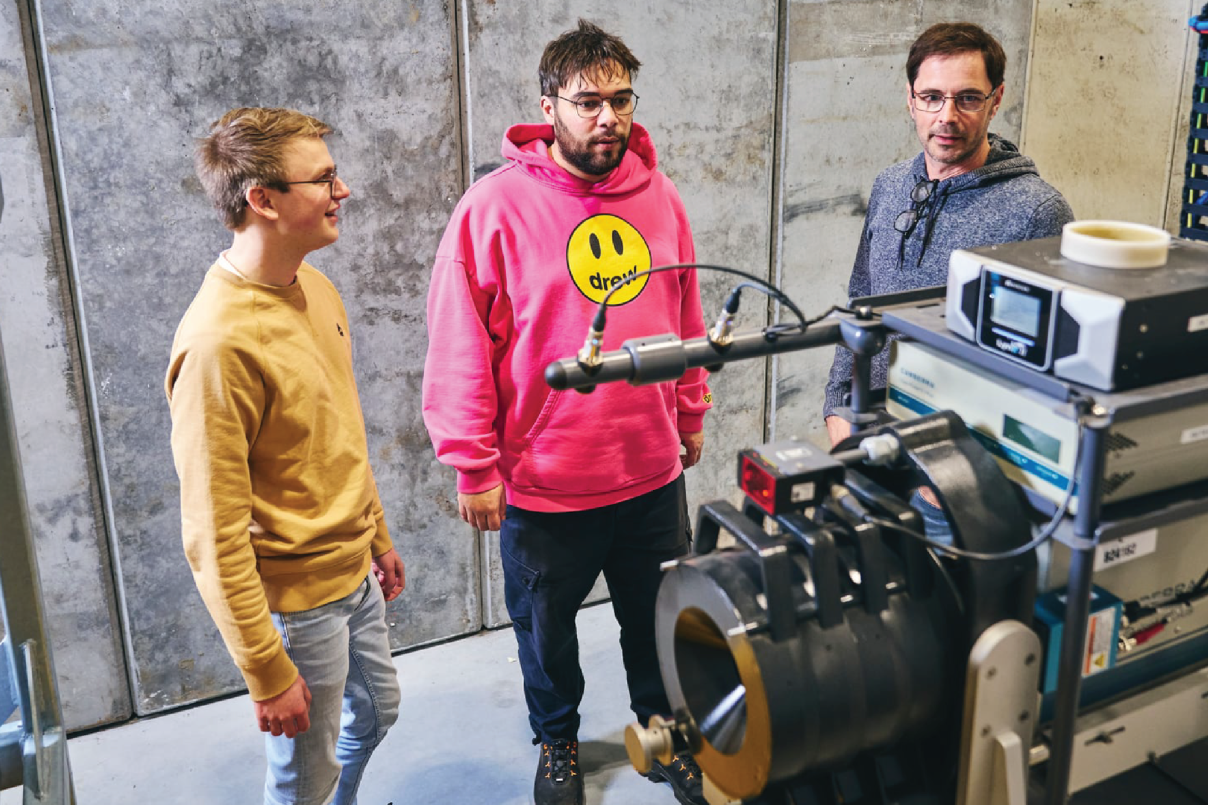
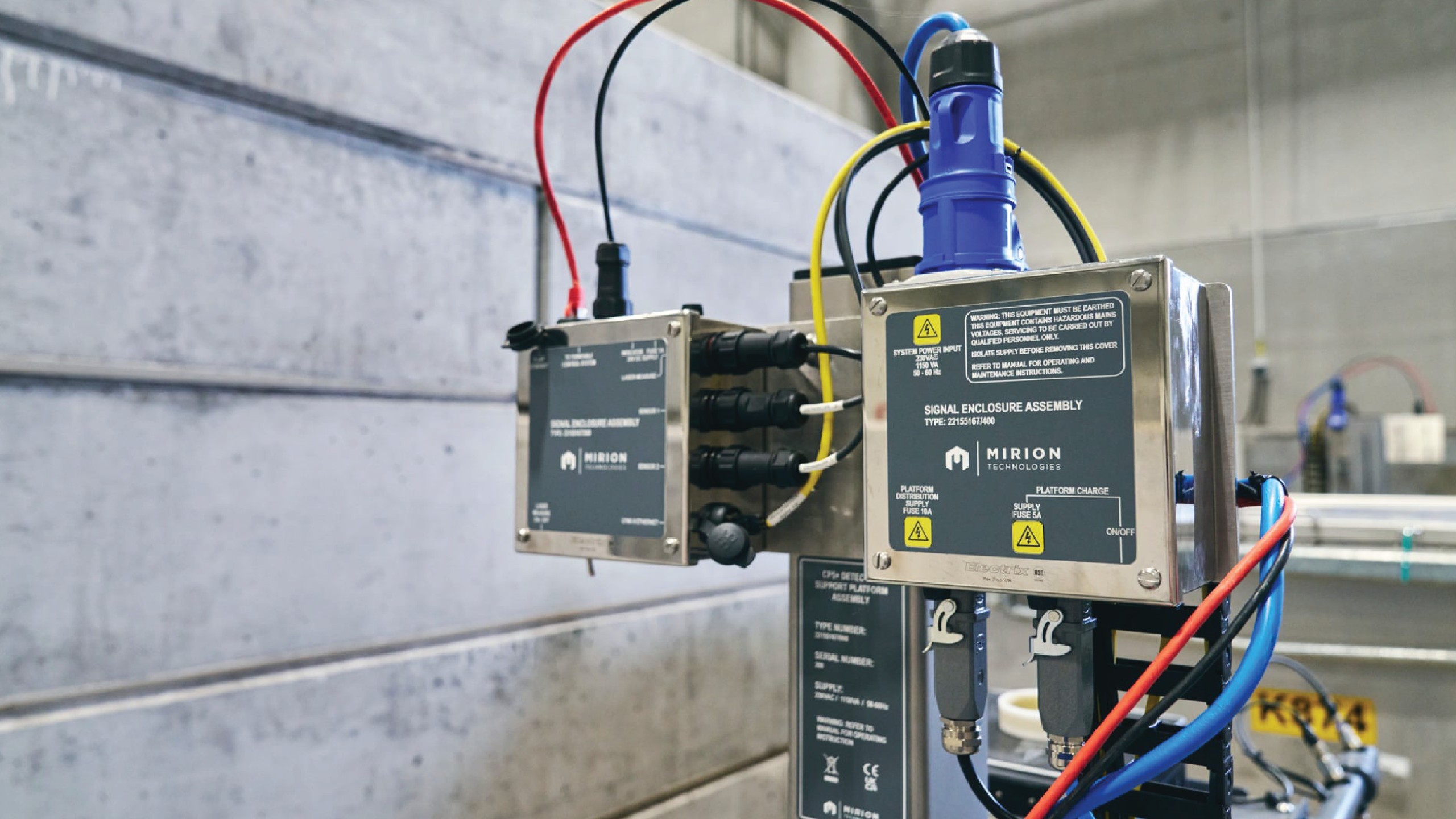
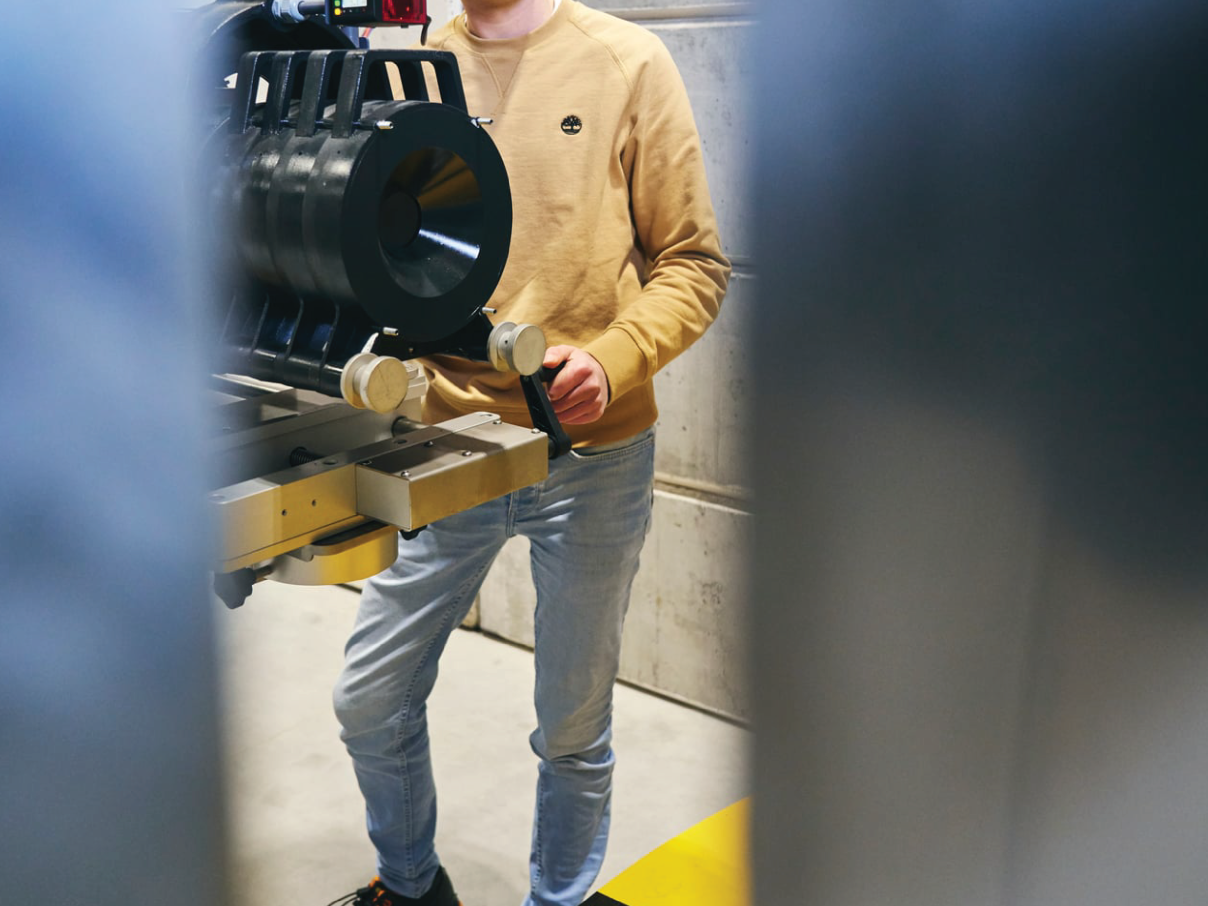
E.L.M.O. (Enhanced Large-container Measurement Operation) is a measurement system developed by Mirion Technologies and further optimized by SCK CEN. The system includes:
- Two electrically cooled High Purity Germanium (HPGe) detectors and detector carriages
- A 10-ton indexed turntable, based on Mirion’s OSAS system
Thanks to this configuration, large waste containers, such as Monolith Type III baskets, can be characterized with high precision. The system offers flexibility in measurement configurations, including open geometry, segmented gamma scanning, and angular segmented gamma scanning.

Validation of measurement methods for Monolith Type III
Monolith Type III baskets are specifically chosen in this project because they represent a challenging type of waste package for which no characterisation method has yet been established or qualified by ONDRAF/NIRAS. They will be produced during the dismantling of nuclear installations in Belgium, making it essential to develop and validate suitable measurement approaches for this future waste stream.
FAQ
-
It concerns low- and intermediate-level short-lived radioactive waste, also known as category A waste. This waste intended for near-surface disposal contains a lower level of radioactivity than high-level waste and decays most of its activity after few hundred years. This type of waste mainly originates from maintenance of nuclear power plants, during dismantling of nuclear installations, and through the use of radioactive substances in industry, medicine, and scientific research. The goal is to safely dispose of this waste so that it poses no risk to public health, now or in the future.
-
Surface disposal is a method of safely storing low- and intermediate-level short-lived radioactive waste above ground. In Belgium, the surface disposal facility will be constructed in the municipality of Dessel. Until then, the waste is stored in special buildings at Belgoprocess, where it remains monitored and secured.
-
A Monolith is a specially designed concrete container used for the safe conditioning of low- and intermediate-level short-lived radioactive waste destined for near-surface disposal. These concrete containers serve a dual purpose: they shield against radiation and confine the radioactive materials. The monolith Type III is intended for bulk waste and contains an internal steel basket that encloses the material. The resulting structure ensures mechanical stability, protects against water infiltration, and isolates the waste from the environment, making it suitable for long-term surface disposal, such as at the planned facility in Dessel.
Why is E.L.M.O. innovative?
Radiological characterisation of large-volume waste packages has long been challenged by high levels of uncertainty. These uncertainties are primarily caused by matrix-related parameters, such as the distribution of radioactivity or density within the waste.
E.L.M.O. introduces a breakthrough by:
- Accounting for matrix-related parameters in its analysis
- Accommodating a wide range of measurement configurations such as segmented and angular segmented gamma scanning to better capture the spatial distribution of activity
- Integrating multiple data sources to build a complete and more reliable picture of the radioactive content

SCK CEN’s role
“By incorporating matrix-related parameters into our analysis, we can achieve more accurate results than is possible with existing, traditional techniques which means lower uncertainty and greater reliability,” says Wouter Broeckx, characterisation expert at SCK CEN.
SCK CEN plays a central role in the improvement and qualification of the E.L.M.O. system within the ANUBIS project. As a research centre with decades of experience in nuclear technology, SCK CEN employs advanced computational methods to optimize accuracy and thereby reducing efficiency-related uncertainties, providing reliable estimates.
In addition, artificial intelligence techniques, such as machine learning, are integrated to automatically optimize the balance between measurement precision and cost-efficiency. This makes the system not only smarter but also more efficient in practice.

Qualified and ready for use with room to grow
The E.L.M.O. system has already received qualification from ONDRAF/NIRAS for its current application at SCK CEN, where it is routinely used for the characterisation of operational waste produced at the research centre.
At the same time, further development is underway within ANUBIS, where the system is being refined to enhance its versatility and to improve measurement accuracy, with a particular focus on the characterisation of Monolith Type III baskets.
An example of industrial innovation within ANUBIS
The collaboration between SCK CEN and Mirion Technologies is a prime example of how scientific expertise and industrial technology can come together to address societal challenges. Within ANUBIS, E.L.M.O. is one of four industrial partnerships contributing to the safe, sustainable, and cost-efficient disposal of radioactive waste in Belgium.
ANUBIS & the relaunch plan for Belgium and Europe
Let’s rewind to 2021. At that time, the European Union awarded SCK CEN funding for the ANUBIS project, which stands for "Advancing NUclear dismantling in Belgium through Improving Sustainability". The main goal of the project is to develop technologies and competencies to maximize the reuse of materials released during nuclear decommissioning. This includes the construction of a new research, development and demonstration facility with associated facilities for supporting innovation in dismantling projects in Belgium.
The project not only fits in with the Belgian European plan for the economic recovery from the COVID-19 pandemic, but it also connects seamlessly with the sustainable dismantling of the five nuclear power plants at Doel and Tihange. "And we are not alone," said An Bielen, who is leading the ANUBIS project at SCK CEN. "We are already joining forces with four partners in the private sector.”
💡 Do you want to know more about ANUBIS? Click here.