
LEANDREA: Belgian demonstrator for lead-cooled fast SMRs
SCK CEN, within a European consortium, is developing the first Belgian fast, lead-cooled Small Modular Reactor (SMR).
SCK CEN has been researching future reactor concepts for many years, including advanced Small Modular Reactors. Lead-cooled technology can become a key link in a sustainable energy supply.
In collaboration with a strong international consortium, we aim to build a Belgian demonstrator of the very first lead-cooled Small Modular Reactor by 2034.
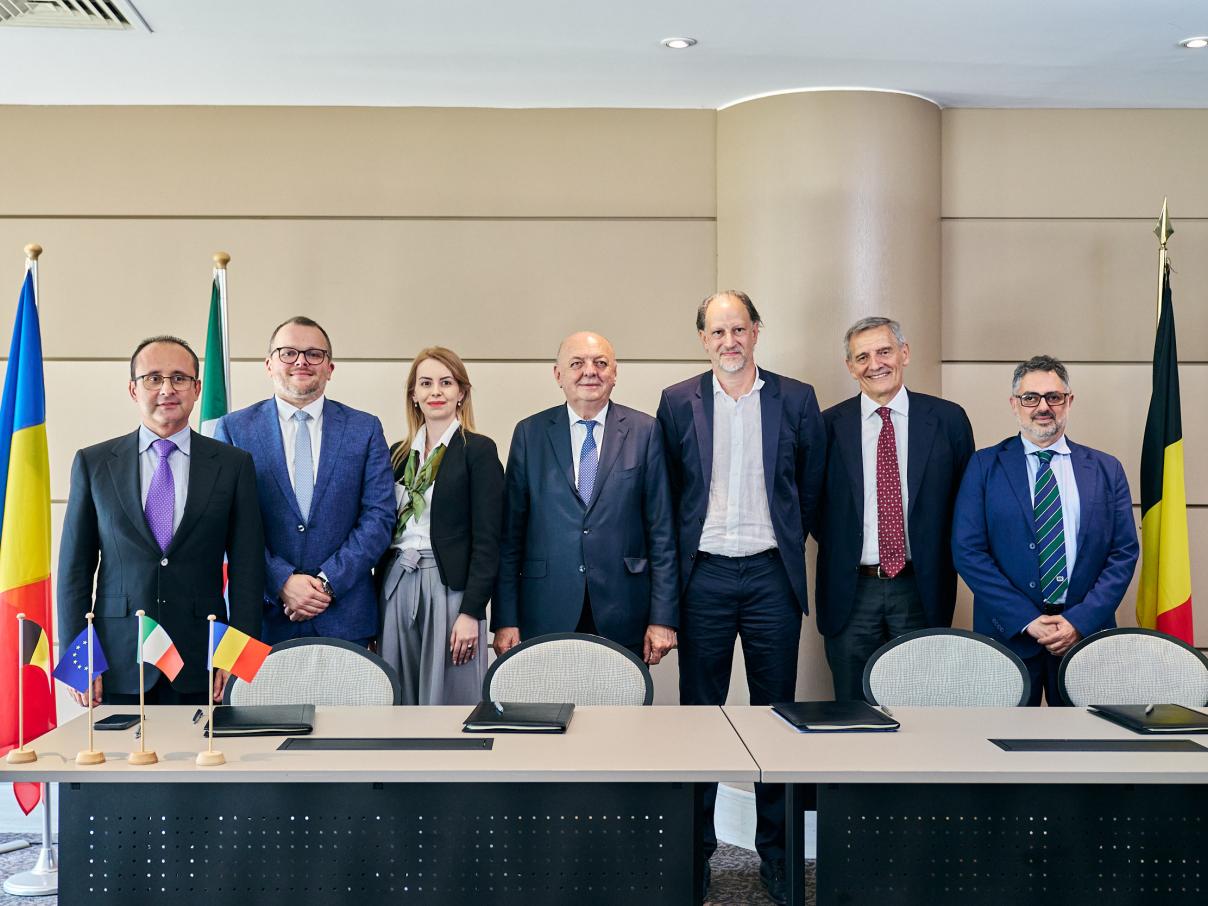
LEANDREA Technology Demonstrator
Europe needs reliable, low-carbon energy sources. At the request of the Belgian government, SCK CEN is developing a demonstrator model of a fast, lead-cooled SMR: the LEANDREA Technology Demonstrator.
The development of LEANDREA is part of the broader EAGLES programme, an international collaboration with Ansaldo Nucleare, ENEA and RATEN. Within this programme, partners combine their knowledge and experience with one clear ambition: to develop innovative lead-cooled SMRs that contribute to a sustainable and safe energy supply for Europe. The ultimate goal is the commercial rollout of EAGLES-300, a small, modular, lead-cooled reactor with an electrical output of 300 MWe, planned for 2039.
👉 Discover more about the EAGLES programme.
Fast & lead-cooled: The technology behind LEANDREA
LEANDREA is a demonstrator of an innovative, fast, lead-cooled Small Modular Reactor. This SMR technology differs from the reactors currently in operation in Belgium and from many other SMRs in development, which are typically water-cooled.
💡 Want to learn more about SMRs in general? Read more here.
In a fast reactor, the chain reaction is sustained by fast neutrons. To keep neutrons fast, the reactor core cannot be cooled with water, because light molecules like water slow neutrons down. Heavy metals such as lead are suitable coolants.
Lead-bismuth is theoretically possible, but bismuth is too rare to support a fleet of lead-cooled SMRs in the long term.
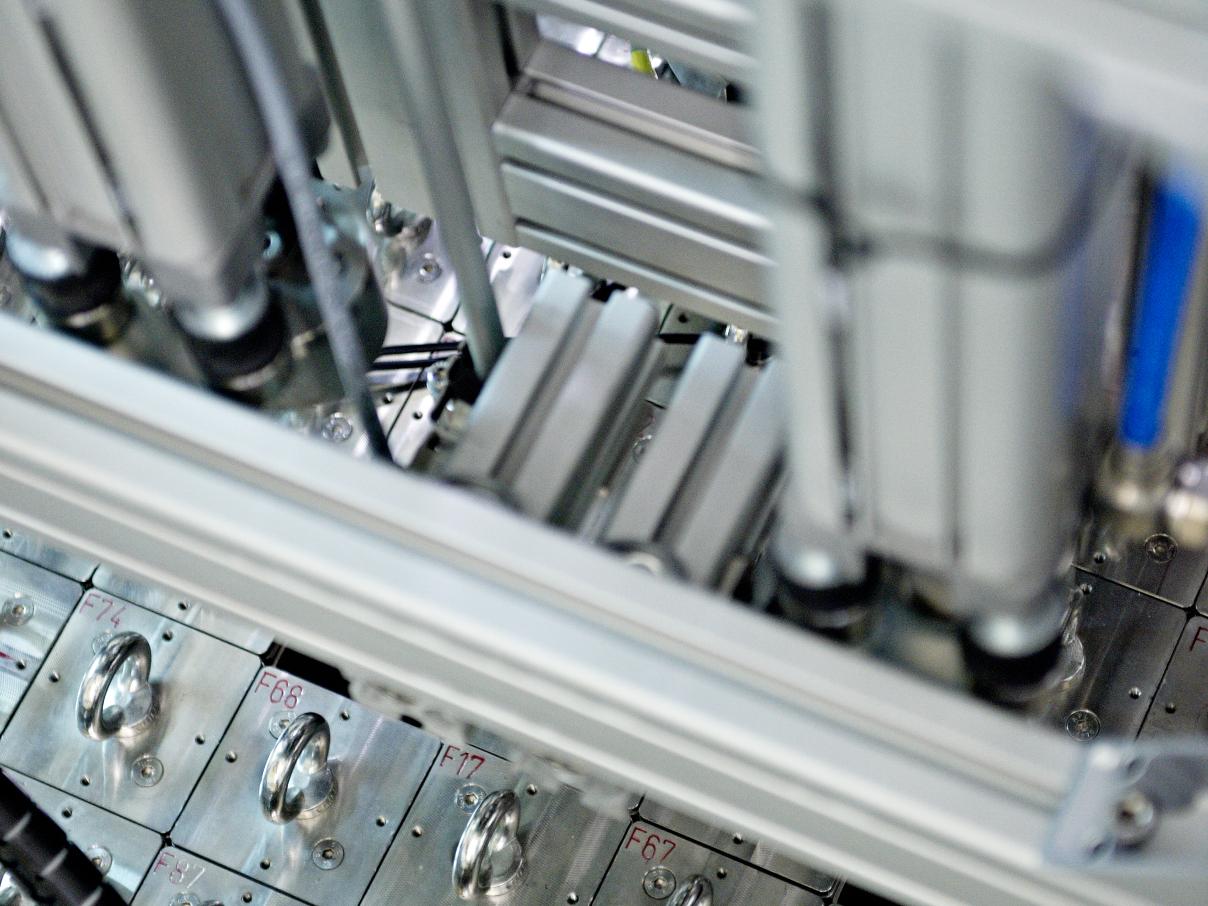
Advantages of a fast SMR
This advanced technology offers several advantages, particularly in terms of sustainability and safety.
Reduced high-level waste & more efficient fuel use
In a closed fuel cycle, a lead-cooled SMR has advantages over traditional water-cooled reactors. Fast neutrons have a higher probability of fissioning heavy elements (e.g., plutonium and ‘minor actinides’) than thermal neutrons. The energy yield is also higher because more uranium-238 is used (after neutron capture and fission of Pu-239) than in water-cooled reactors. A fast reactor can use nuclear fuel more efficiently, extracting more energy from the same amount of fissile material. A lead-cooled fast SMR also has the potential to reuse spent fuel that would normally be considered waste. This recycling reduces both the volume and radiotoxicity of radioactive waste.
♻️ Would you like to learn more about spent fuel recycling?
Safety
The design for LEANDREA emphasises passive safety systems.When the reactor shuts down, the coolant automatically dissipates the heat through natural circulation. An additional passive safety benefit of lead as a coolant is that the reactor operates at low pressure, eliminating the risk of pressurisation incidents.

Pooling expertise in a strong European consortium: EAGLES
A major strength of the EAGLES programme is its consortium of renowned European partners: Ansaldo Nucleare, ENEA, RATEN and SCK CEN. The consortium combines industrial know-how with deep expertise in liquid metals, strengthening both scientific breakthroughs and the commercial application of the technology. Having an industrial partner like Ansaldo ensures focus not only on research but also on actual commercialisation, significantly increasing the project’s chances of success.
Ansaldo Nucleare, ENEA, RATEN and SCK CEN will systematically address all requirements to successfully implement lead-cooled SMRs as a sustainable, CO₂-neutral energy source. In addition to electricity, a lead-cooled, fast SMR can also produce hydrogen and heat.
From Belgian and Romanian precursors to commercial deployment
The commercial rollout will require extensive research and intensive testing. The newly formed collaboration has outlined a clear vision, based on a step-wise approach to demonstration. Together, we will fulfill all requirements for the successful implementation
- LEANDREA – Technology Demonstrator (Mol, Belgium)
The programme starts with the construction of a small-scale reactor in Mol, Belgium. By 2034, the Belgian demonstrator of the first lead-cooled SMR should be operational. The partners will use this reactor to demonstrate technological and construction aspects. LEANDREA is developed as both a technology demonstrator and a test facility for materials and fuels specific to fast reactors, and will support research into applications beyond electricity production.
- ALFRED – Performance Demonstrator (Pitești, Romania)
The next phase involves constructing ALFRED in Pitești, Romania, focusing on the technical and economic feasibility of future commercial SMRs.
- Commercialisation of EAGLES-300
The EAGLES consortium aims to commercialise EAGLES-300: a lead-cooled, Generation IV small modular reactor designed for broad deployment in Europe’s future energy mix.
What is the Belgian budget spent on?
The government's mission and budget are focused on research and development. We want to build a demonstration model of this lead-cooled technology in Belgium in light of the industrial roll-out of SMR-LFRs. We cannot do this alone. We need input from other research organisations and industrial partners. We are merging our knowhow with existing knowledge and designs of partners, taking an immediate lead in the project.
The ultimate goal is to bring lead-cooled SMRs to the market, thus providing society with a sustainable energy solution. Of course, every partner, and by extension Belgium, wants to reap the benefits of this final solution.