
PhD Defense | Val Maverick Abecia | Influence of organic matter on the fractionation and mobility of naturally occurring radionuclides in geothermal systems
Name: Val Maverick Abecia
Research output: click here
Date: August 31, 2026 - 13:30h
Location:
Aula van de 2de Hoofdwet (TI 01.002), Thermotechnisch Instituut, KU Leuven, Kasteelpark Arenberg 10, 3001 Leuven
Teams link for online participation:
https://teams.microsoft.com/meet/354890817239374?p=uMC1T1kuc1kTkXsFGm
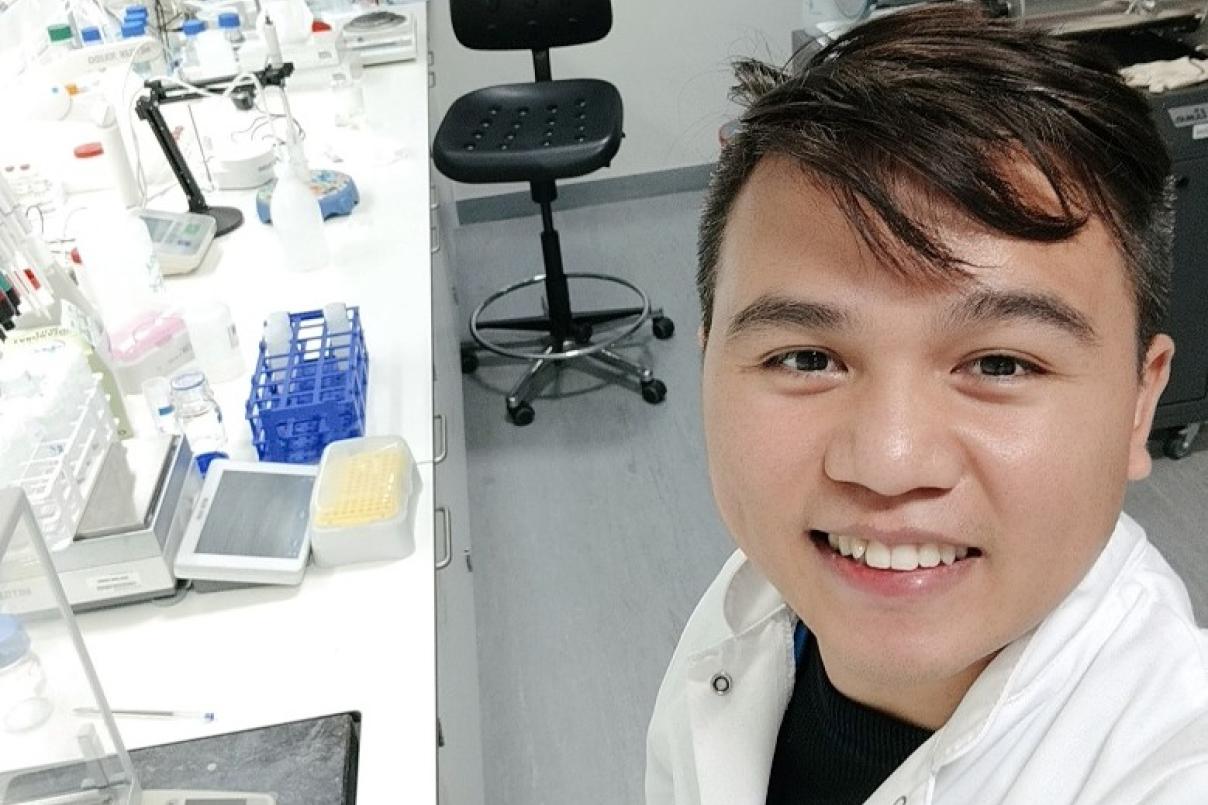
Influence of organic matter on the fractionation and mobility of naturally occurring radionuclides in geothermal systems
Geothermal energy is widely recognized as a key renewable, low carbon, and baseload energy capable of meeting current and future global energy demands. However, scale deposition and corrosion remain major operational challenges. Recent studies have shown that scale deposits can accumulate naturally occurring radionuclides (NOR) from the 238U and 232Th decay series, leading to generation of naturally occurring radioactive material (NORM). Existing mitigation strategies against scaling and corrosion rely on organic-based chemical inhibitors that introduce synthetic organic matter (synthetic OM) into geothermal brines, adding to the natural organic matter (NOM) from reservoir rocks. Despite the potential importance of organic matter in NOR release, fractionation, transport, and accumulation, its occurrence and role in geothermal systems remain poorly understood.
This study investigates organic matter and NOR in reservoir rocks, rock leachates, geothermal brine, and scale deposits from high temperature, hypersaline geothermal environments, using the VITO Deep Geothermal Installation (VDGI) in Mol, Belgium, as the primary case study. At the VDGI, 210Pb and 210Po activity concentrations in scale deposits reach 250 Bq/g and 9,160 Bq/g, respectively. In addition, amorphous organic phases were observed alongside mineral scales, prompting investigation of their origin and role in NOR fractionation and mobility.
A multi-method approach combining field sampling, laboratory experiments, and geochemical modeling revealed that NOM is released from reservoir rocks primarily through leaching and carbonate dissolution, whereas the type of synthetic OM released by chemical inhibitors into the geothermal brine depends on their stability at high temperature and high salinity conditions. Analyses of geothermal brine showed a predominance of hydrophilic, low molecular weight organic compounds. Degraded inhibitor products were identified as the most likely source of the amorphous organic phases responsible for filter clogging within the surface installation.
The release of NOR from reservoir rocks is driven by mineral dissolution, leaching, and α-recoil, whereas accumulation in scale deposits is controlled by co-precipitation, sorption, surface deposition, degassing, and particle separation. While radium isotopes remain highly mobile through chloride complexation, 210Pb and 210Po strongly accumulate into solid phases, particularly sulfide minerals. Organic matter plays a minor role in dissolved NOR transport but can affect radionuclide fractionation and mobility through sorption, and redox reactions leading to mineral deposition. This work provides an overview of the mechanistic framework to better understand the fractionation and transport of NOR in geothermal systems, supporting future improvements in NORM management, waste handling, and radiation protection.
Promoters:
Prof. Dr. Ir. Valérie Cappuyns, KU Leuven
Prof. Simona Regenspurg, GFZ
SCK CEN mentors:
Dr. Sonia Salah
Dr. Mirela Vasile
VITO mentor:
Dr. Ben Laenen