
ETRAP 2027 (9th international conference on education and training in radiation protection)
Abstract can be submitted until 31 January, 2027 by using the abstract template in the abstract submission system.
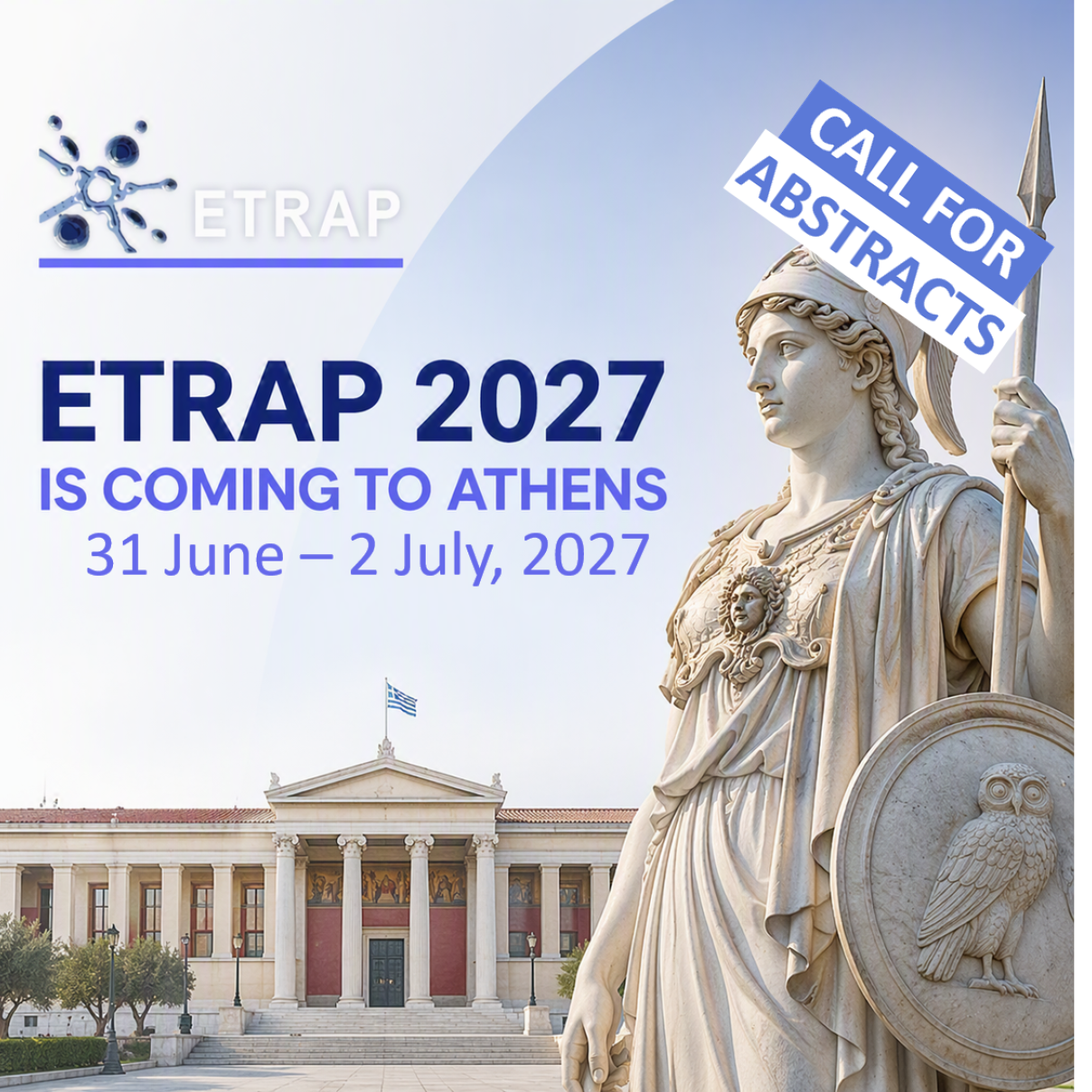
Alkis Argyriadis Amphitheatre
Main Building of the National and Kapodistrian University of Athens (NKUA)
Panepistimiou Street 30
Athens
Greece
Topics
ETRAP offers the opportunity for learning, discussing and networking about the latest findings and developments in education and training in radiation protection, and facilitates networking amongst the different stakeholders.
Conference topics for the 2027 edition:
- AI and modern learning techniques
- The use of artificial intelligence, AR, VR, XR etc. for E&T purposes in radiation protection
- Initiatives of competence building other than RPE, RPO, MPE
- Competence building initiatives for people potentially exposed to or using ionising radiation
- Competence based systems and qualification of professionals
- Focus on defining and evaluation of competences, as well as cross border initiatives
- Attracting and preserving a competent workforce in radiation protection
- Ensuring and maintaining the necessary workforce related to radiation protection
- Integration of social sciences and humanities and public engagement
- Facilitate the understanding of benefits and risks of working with ionizing radiation by creating awareness, developing societal context and ethical reasoning
Audience
Since 1999 the ETRAP conferences intend to bring together training providers, academics, policy makers, radiation protection professionals, regulators and authorities, and end-users of education and training in radiation protection.
Key dates
Abstract submission deadline: 31 January, 2027
Full paper deadline: 10 May, 2027
ETRAP Conference: 31 May - 2 June, 2027
Organisation
This conference is organized by the Belgian Nuclear Research Centre SCK CEN, the Greek Atomic Energy Commission (EEAE) and the European Federation of Organisations for Medical Physics (EFOMP) in cooperation with EUTERP and IRPA, and with support of HERCA.