SCK CEN doubles its nuclear fuel testing capacity
The Belgian Nuclear Research Centre has installed a second PWC facility in BR2
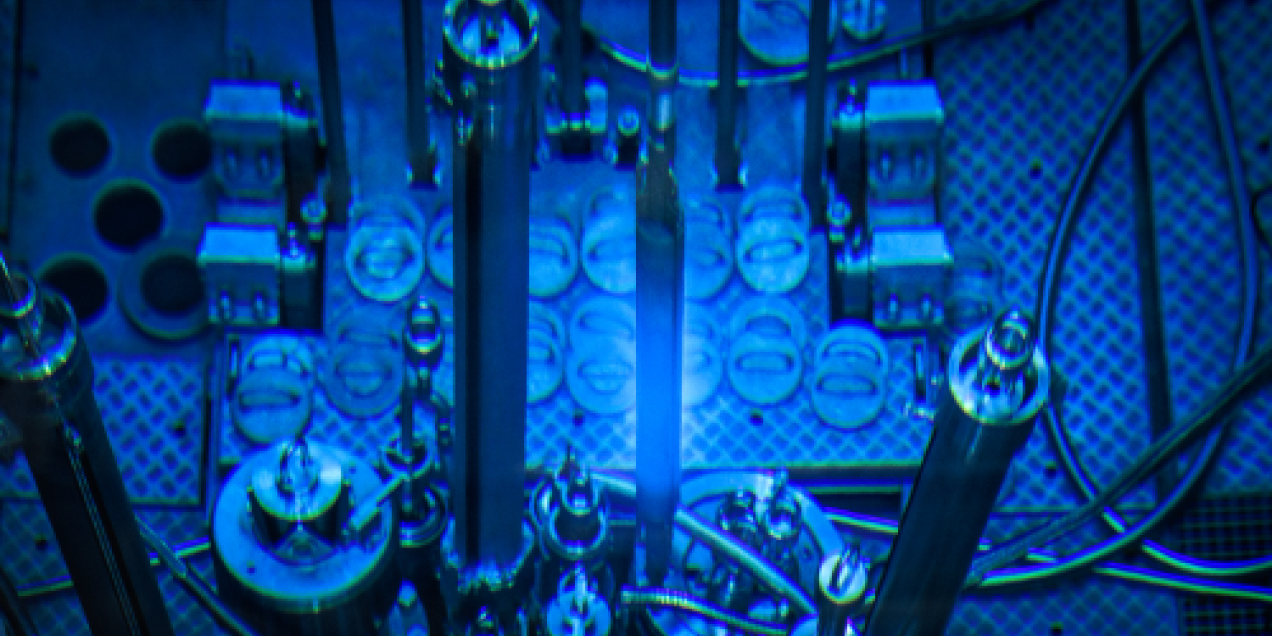
The nuclear research centre SCK CEN has commissioned a second PWC facility. With that facility, it has now doubled its capacity to put newly developed nuclear fuel rods to the test. “In technical terms, this type of test is known as a transient test. It involves simulating a sudden power increase of a reactor so that we can identify what increase causes the cladding – the first physical barrier containing the uranium fuel – to fail,” explained project leader Brian Boer. In the reactor cycle that has now been completed, that doubled capacity was immediately put to use. “We carried out two transient tests one after the other,” he said.

A car hitting a lamppost, overturning or colliding head-on – no model of car is allowed onto the market without passing a crash test. “A crash test evaluates the impact of an accident and therefore the safety of the vehicle itself. The equivalent of the crash test in the case of nuclear fuels is the transient test,” said Brian Boer, nuclear fuel expert at SCK CEN. Tests of that type are indispensable when ensuring the safety of nuclear power plants. They probe the safety margins of (newly developed) fuels and form the final piece in a licence file. “In Europe, we are the only organisation that is allowed to perform these necessary tests,” he continued. So supply is limited, but demand remains high.

The industry is probably rubbing its hands together with glee, as this second facility will mean that more testing capacity will become available. “When we installed our PWC-7 in 2020, we were already noticing an increasing demand for more testing capacity. At the time, we were already talking about building an identical copy of it,” said Brian Boer's colleague and PWC operations manager Miquel Torres. And that copy is now officially up and running, as it has just completed its first transient test. The new installation is known as the ‘PWC-8’. PWC stands for Pressurised Water Capsule, while the number indicates that this is the eighth generation of it.
Test assurance
Now that it has two installations at its disposal, SCK CEN has not only doubled its capacity, but if a fuel rod fails, the nuclear research centre is now also able to schedule further tests more quickly. As Miquel Torres explains, "When the cladding fails, we detect activity in the water in the PWC plant. The fission products released are then correctly and safely collected. Before starting another test, we must thoroughly clean the capsule and its water circuit outside the core. That cleaning process takes time because no residual contamination from the previous experiment is allowed to remain. That way, we can avoid the possibility of traces of previous fission products affecting the results of a subsequent test. Thanks to our second PWC installation, we already have a ‘clean’ capsule, which means that we can already proceed with the scheduled tests, while the other, ‘dirty’ capsule is being cleaned and prepared. This then provides nuclear fuel manufacturers with greater certainty regarding their test schedules.”
How a transient test is carried out
Fuel rods in a commercial power plant are four-metre-long tubes into which uranium is stacked in the form of ceramic pellets – cylindrical tablets about 1 cm high. For a transient test, a sample of about half a metre is sufficient. The nuclear research centre SCK CEN loads this into the PWC water capsule and positions it in the reactor core of the BR2 research reactor. The reactor runs at low power for a day, after which the reactor operators double the power in under two minutes. This increase causes the temperature of the test rod to rise. The outside temperature remains at the normal operating temperature, but in the core, the temperature doubles to well over 2000°C. As the temperature rises, the fuel expands and exerts pressure on the cladding.
“If we see activity in the water of the PWC, the cladding has failed and the test is stopped so that the damage can be examined in our laboratories at LHMA. If there's no activity, we maintain that power for twelve hours and then examine the rod for damage. This could take the form of small cracks that can't be seen with the naked eye, for example," explained Brian Boer. The results generated by the transient test are used to validate computer codes, which can then be used to perform dozens or hundreds of simulations. Those insights enable nuclear fuel manufacturers to set safety limits for the operation of commercial reactors and to implement innovations safely.