
Nuclear emergency plan: 60 participants, eight measurement teams and aerial resources deployed at Sambrexpo
Over two days, more than 60 participants took part in an exercise run by the Measurement Cell (CELMES) in Aiseau-Presles. Eight measurement teams, a mobile laboratory, drones and helicopters were deployed to test coordination between the parties involved and the flow of information in a nuclear or radiological emergency.
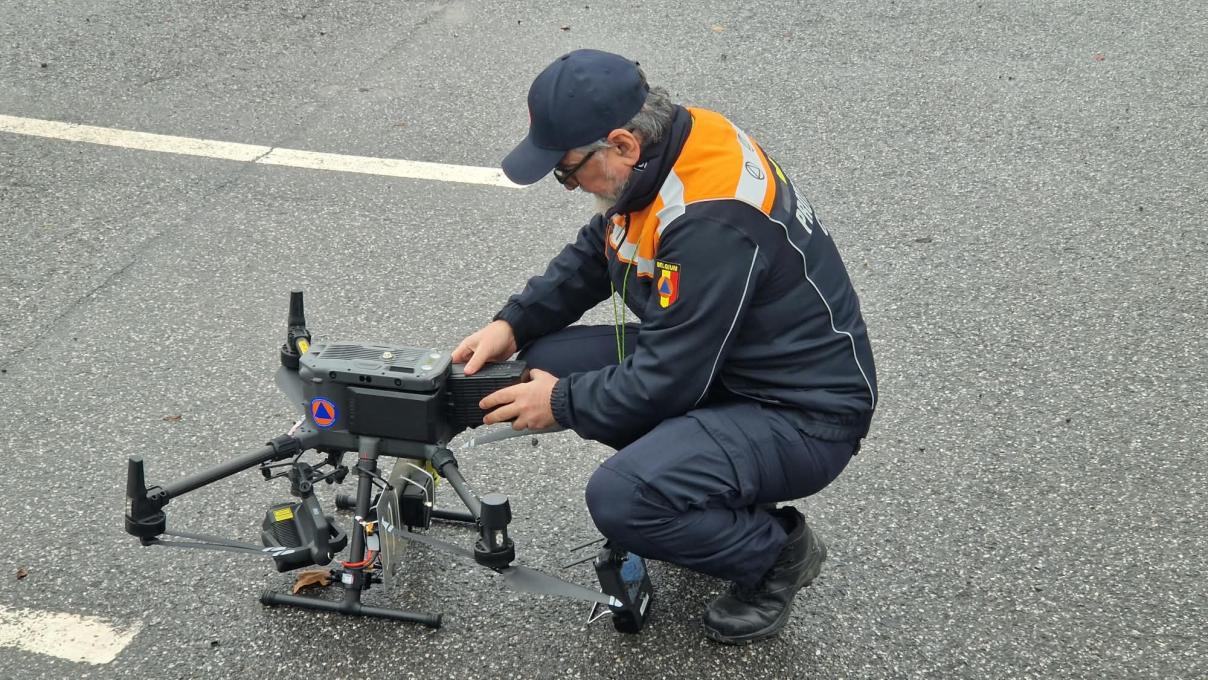
How can radioactivity in the surrounding area be measured, and how can interventions be coordinated in a nuclear or radiological emergency? Based on a fictional scenario involving a radioactive release from the site of the National Institute for Radioelements (IRE), the field exercise held on 19 and 20 November made it possible to mobilise the various players in the measurement chain and test their coordination and communication procedures.
A base camp and specialist resources deployed on site
The measurement teams’ base camp was set up at the Sambrexpo site, which the municipality of Aiseau-Presles made available through the Autonomous Municipal Enterprise (AGB). In total, more than 60 participants from Civil Protection (FPS Home Affairs), Defence, SCK CEN and the Federal Agency for Nuclear Control (FANC), along with other partners involved, including ENGIE, took part in the exercise.
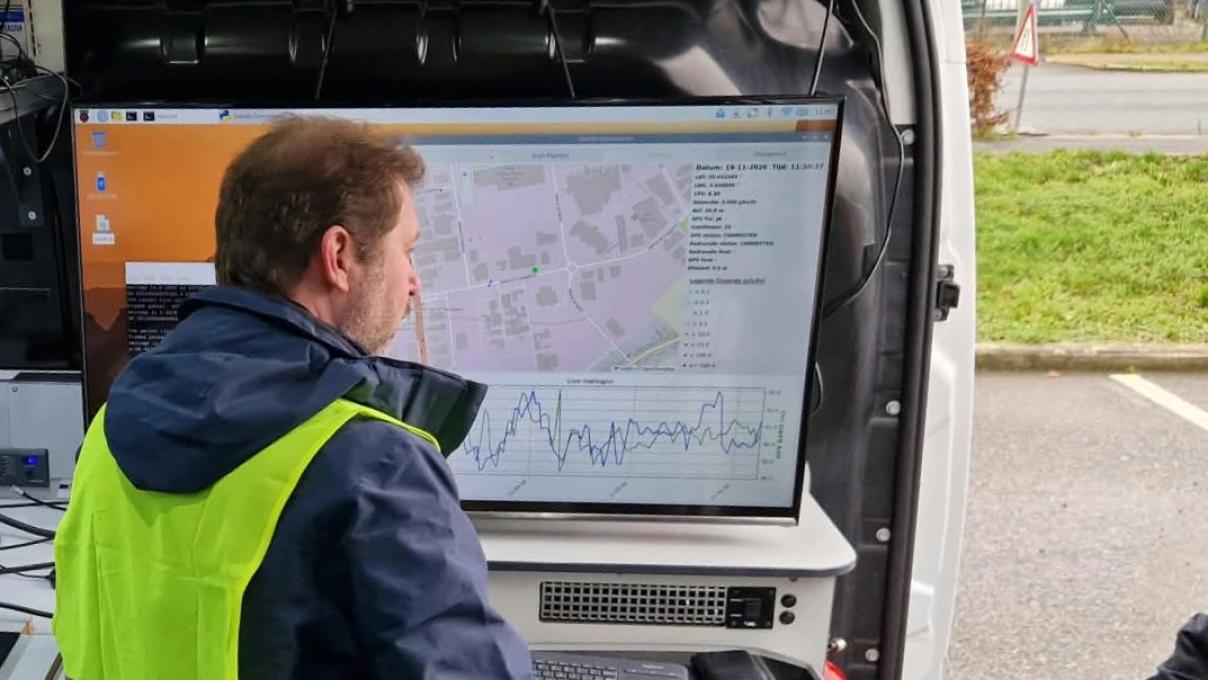
The set-up comprised eight measurement teams and vehicles, two levels of coordination (federal and local), a drone team and a Civil Protection mobile laboratory, an A109 helicopter and a Defence mobile laboratory, and around ten people responsible for running the base camp.
From Sambrexpo, the teams prepared to carry out measurement assignments and take samples in nine neighbouring municipalities. Some teams also wore personal protective equipment to simulate realistic intervention conditions.
A digital platform for better coordination of interventions
The exercise also provided an opportunity to test the new version of a digital platform developed by CELMES to manage and coordinate measurement teams in a radiological emergency. The tool makes it possible to plan assignments, allocate interventions to the available teams and track their positions in the field in real time. It also centralises measurement results and laboratory analyses so that the information is accessible to the various coordination levels, in particular the federal evaluation cell.

This centralisation is a significant development for the flow of information between teams in the field, local coordinators, laboratories and federal coordination. In particular, it is meant to facilitate the monitoring of operations and help ensure that better decisions are made.
Preparing to better protect the public
The Measurement Cell (CELMES) brings together specialist teams from Civil Protection (FPS Home Affairs), Defence, SCK CEN, the IRE and the FASFC, under the responsibility of the FANC. If the nuclear emergency plan is activated, the cell steps in to measure radioactivity in the surrounding area and provide the information needed to assess the situation and protect the public, the environment and the food chain.

Multi-year process
The exercise in Aiseau-Presles forms part of a multi-year process of preparation and continuous improvement of procedures. The findings gathered over these two days will form the basis of a collective evaluation to identify best practices and any areas for improvement.


