
Turning down the heat: PRACLAY heating stops after 11 years
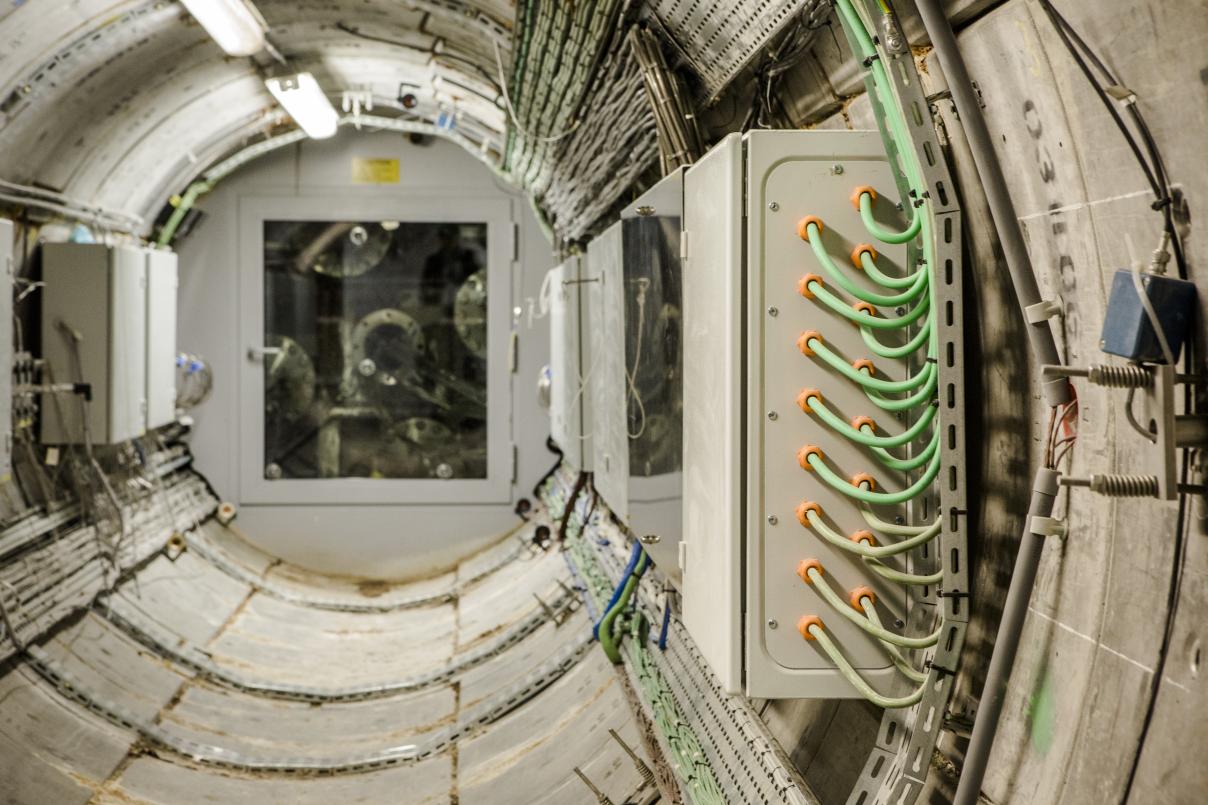
After more than a decade of continuous heating at 80°C, the heating phase of the large-scale in situ PRACLAY Heater test—an ambitious in situ experiment in the field of geological disposal of radioactive waste—has officially come to an end. Today, November 3rd, 2025, the heating power was switched off, marking exactly 11 years since it was activated in the PRACLAY gallery, located 225 meters underground in HADES.
A moment to celebrate
As the heaters power down, it’s time to recognize the remarkable achievement of the PRACLAY team, consisting of EURIDICE technicians and scientists as well as ONDRAF/NIRAS collaborators. Their commitment, precision, and scientific rigor have made the large-scale in situ PRACLAY Heater test a cornerstone of the Belgian Programme on Radioactive Waste management.
“This is a proud moment for EURIDICE technicians and scientists. The Boom Clay has shown that it can withstand the thermal load induced by heat emitting high-level radioactive waste. That’s a major step forward in ensuring the long-term safety of geological disposal.” Arnaud Dizier, senior scientist and project leader at EURIDICE.
This work underground has brought confidence to the final disposal of radioactive waste. The collaboration between EURIDICE, NIRAS/ONDRAF and SCK CEN, is emphasized here once again.
Why do we heat the clay?
High-level radioactive waste emits heat, even decades after its production. When this waste is placed in deep geological disposal galleries, the heat it generates can affect the surrounding host formation. Understanding how this geological formation responds to the increase in temperature induced by long-term heating is important for designing safe and effective disposal solutions.
The large-scale in situ PRACLAY Heater test was designed to simulate these conditions. To study the thermo-hydro-mechanical (THM) behavior of the Boom Clay, a 30-meter long section of the PRACLAY gallery was heated to a constant temperature of 80°C—slightly higher than what would be expected in a real repository.
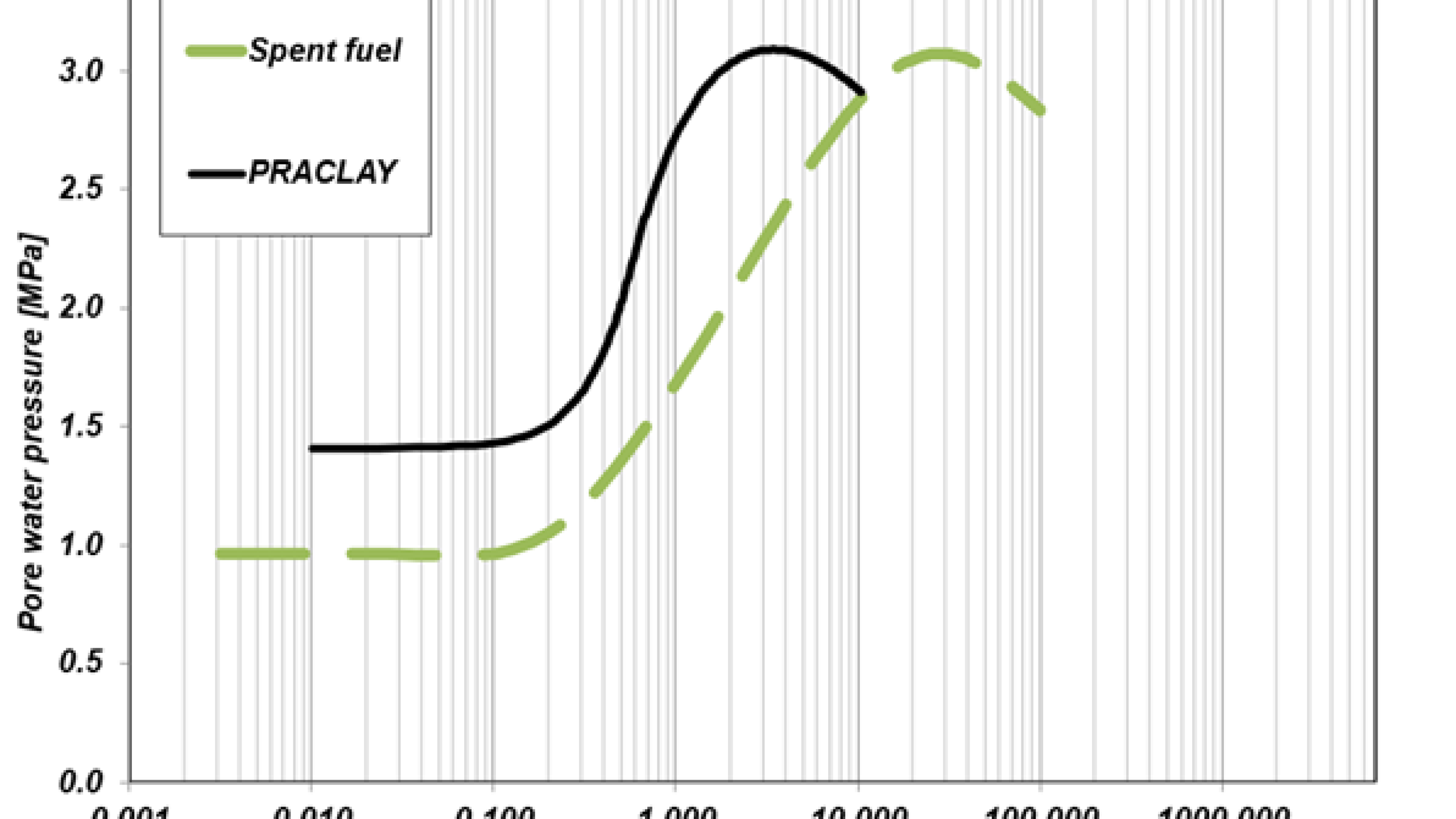
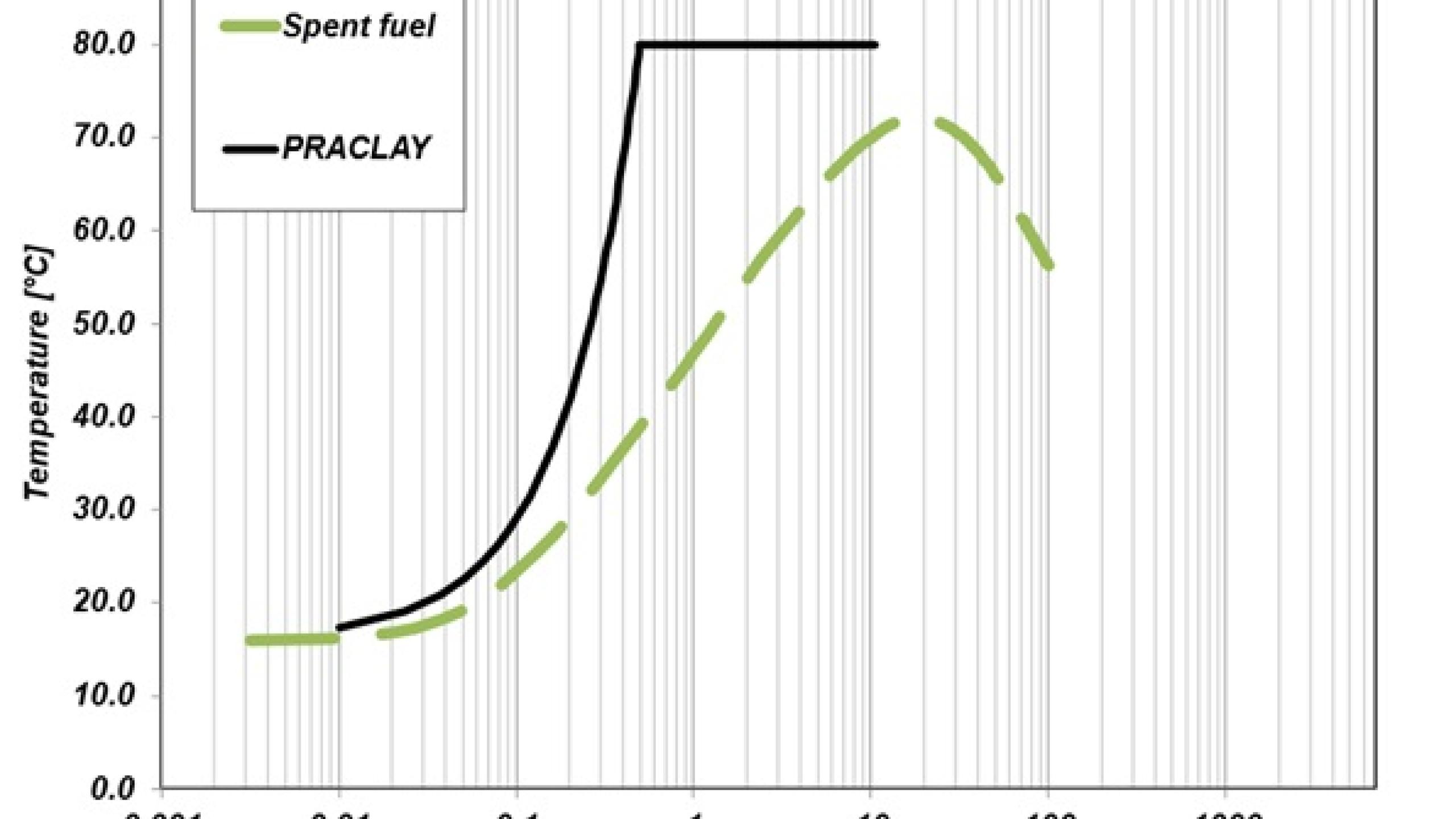
The PRACLAY experiment was designed to be more penalizing, thus having a more damaging impact on the surrounding Boom Clay than packaged high-level radioactive waste in a disposal gallery. The graphs show the modelled responses of temperature and pore water pressure to the heating caused by disposed spent fuel and how it is considered in the PRACLAY Heater test.
A unique experimental setup
The heated section was isolated from the rest of the gallery by a bentonite seal supported by a steel structure. This setup ensured the isolation of the heated part of the gallery from the rest of the URL, allowing researchers to observe how heat affects the clay without external interference.
More than 1000 sensors were installed in and around the gallery to monitor temperature, pore water pressure, displacement, and stress. These sensors continuously generated data, which were compared with predictive models to validate and refine our understanding of clay behavior under thermal load.
vviissiitt EEUURRIIDDIICCEE..bbee ffoorr mmoorree ddeettaaiillss
What we learned
The results of the heating phase of the PRACLAY Heater test have validated our knowledge, the Boom Clay reacted as expected to the increase of temperature. We are able to correctly model the variation of temperature of the clay in time and at various distances to the heater by numerical modelling. Moreover, we have confirmed that the Boom Clay’s permeability—a key factor in its ability to contain radioactive waste—was not affected by the heating. This confirms its suitability as a host formation for geological disposal. Some important take-aways are given by the PRACLAY team.
“The mechanisms we observed were well-known and expected”, says Arnaud Dizier. “The thermal diffusion and pore water pressure changes matched our models closely. This gives us confidence in the numerical tools we use to assess repository safety.”
Jan Verstricht, who has been a project engineer at EURIDICE since before the PRACLAY gallery was even excavated, played a key role in sensor placement and monitoring. “It’s been incredible to see the data flow in over the years,” he said. “We’ve learned so much about how our instruments perform under long-term thermal load. That knowledge is invaluable for future experiments and repository designs.”
As a researcher at EURIDICE, Temenuga Georgieva, emphasized the importance of long-term stability: “The PRACLAY test has shown that Boom Clay remains stable even under sustained heating. That’s a big return of experience for the feasibility of geological disposal in Belgium.”
The technical team of EURIDICE was indispensable during installation, heating and now cooling of the PRACLAY test. Moreover, they will assist with the experimental design of the dismantling after cooling. Bert Vreys, technician at EURIDICE since 1991, is the team's senior member. He remembers being called out of bed on several occasions. “At EURIDICE, the technical team takes turns being on call. This is always together with one of the scientists in the case of alarms for PRACLAY. Especially in the early years of the heating phase, some of the thermocouples displayed occasional error messages, which triggered the alarm and made an intervention necessary. Some of these temperature sensors we could not save and had to be decoupled, but something we managed to recalibrate them.”
Read more about PRACLAY on the NIRAS/ONDRAF website, where you can find an interview with their deep disposal researchers who work on the project.
Looking ahead
On the 3th of November, the heater power was switched off, and the cooling phase has begun. Now we can start studying the cooling-down of the system. This next step will take several years and provide additional insights into how the clay and surrounding materials respond as temperatures return to the baseline. The data collected during this cooling phase will further refine safety assessments and support the final design of a geological repository . After the cooling phase, the PRACLAY experiment will be dismantled and post-mortem analyses will be done on the Boom Clay surrounding the experiment, the concrete lining, the interphase and the seal between the heater test and the rest of the laboratory. This final stage of the PRACLAY heater test will be also of high importance for validating our knowledge on the Boom Clay and gallery lining behaviours under thermal load.
On November 7th, the EURIDICE team organises an Exchange Meeting which focusses on the end of the heating phase of the PRACLAY Heater experiment and the start of the cooling phase with presentations of the scientists involved. After the meeting, the presentations will be made available.
EURIDICE and HADES
What does this mean for the EURIDICE-team and the HADES underground research lab? Well, the coming years will be busy with monitoring the cooling and interpreting the data of PRACLAY. Moreover, the dismantling and post-mortem analysis also needs to be planned and executed. At the same time, several experiments that are of key importance in demonstrating the safety of deep disposal in clay, are still ongoing. Moreover, as the Belgian programme moves more and more towards implementation, we still need the HADES underground research facility to study the gallery stability, test analysis techniques, follow-up experiments that run over several decades, and to possible start new experiments in function of the Belgian programme.