
PhD Defense | Amit Patil Ravindra | Modeling the impact of potential radioactive releases into the Meuse and Scheldt aquatic systems
Name: Amit Patil Ravindra
Date: April 25, 2025
Location:
BARB 91
Place Sainte Barbe
Louvain-la-Neuve
Belgium
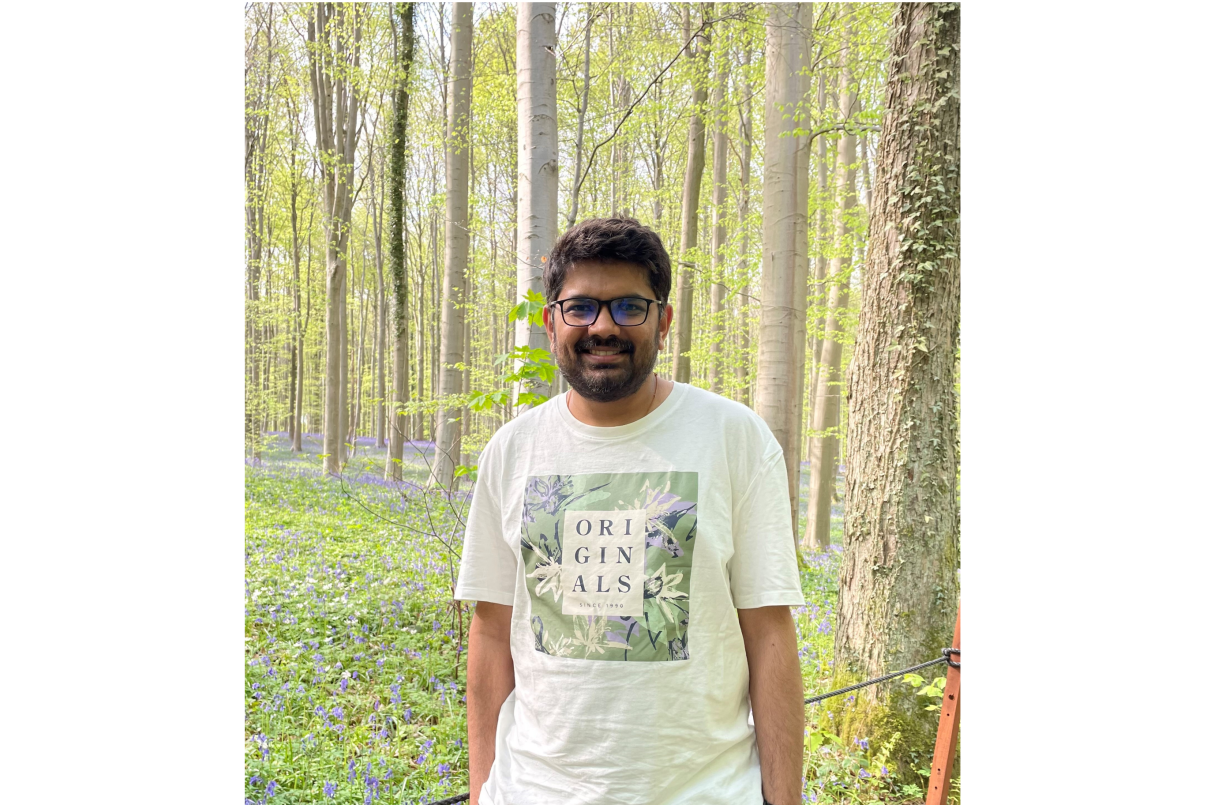
Modeling the impact of potential radioactive releases into the Meuse and Scheldt aquatic systems
The Fukushima and Chernobyl disasters tragically illustrated the risks associated with the civilian nuclear industry. In Belgium, there are two nuclear power plants (Doel and Tihange), while two others are located near its borders on the banks of the Meuse River (Chooz) and Scheldt Estuary (Borselle). As a result, radioactive discharges from these nuclear power plants have a direct impact on the Meuse and Scheldt aquatic systems, where the characteristics of the aquatic system (river, canal, or estuary) can determine how pollution is distributed.Hence, quantitative and qualitative understanding involved in the fate and transport of radioactivity in these water systems is required. Radiological transport models are tools in generating such information that can optimize emergency response strategies.
However, the water flow in the Meuse River, which is connected to Belgium's canal systems, is heavily influenced by hydraulic structures. Whereas the Scheldt system is a high-energy estuary that represents a domain of multiscale nature that deals with everything from the sea to the shallower environment.
In this work we develop a state-of-the-art methodology for assessing the impact of radioactive releases on the water quality in the Meuse and Scheldt aquatic systems, which can be used to deal with potential accidental releases. To this end, additional modules for the simulation of hydraulic structures are incorporated into the SLIM (Second Generation Louvain-la-Neuve Ice Ocean Model: www.slim-ocean.be) modelling framework in order to simulate the radionuclide transport in the Meuse River and canal systems. The developed model is also able to simulate the operation of the structure and enables accurate flow calculation in such large navigation systems. For the Scheldt system, a new multiscale modeling approach for the transport of radioactive pollutants is used, allowing us to simulate complex systems in order to capture the interaction from river to the sea. The developed model was then simulated for several hypothetical radioactive releases based on past nuclear accidents to assess the distribution of radioactivity in their respective aquatic systems. The simulated radioactive distributions are then used to estimate their impact on the humans.
Promoter:
- Eric Deleersnijder (UCLouvain)
SCK CEN mentor:
- Johan Camps
-

Financially supported by ENGIE