
PhD Defense | Margot Vanheukelom | Quantifying the effects of soil and plant characteristics on radiocaesium uptake: A global perspective
Name: Margot Vanheukelom
Date:
November 22, 2024
Location:
Aula Jozef Heuts (00.215)
Landbouwinstituut Hoofdgebouw (331-01)
Kasteelpark Arenberg 20
3001 Heverlee
Quantifying the effects of soil and plant characteristics on radiocaesium uptake: A global perspective
Nuclear energy is growing worldwide and is logically not without environmental risk. It is, therefore, crucial to assess the risks of potential nuclear accidents and how to mitigate their impact on agriculture at a global scale. A major concern is radiocaesium, a radioactive element that is released during nuclear accidents, such as those at Chornobyl and Fukushima. Radiocaesium can contaminate soil and enter the food chain by mimicking potassium, an essential nutrient for crops. This radiocaesium contamination can persist for decades because the radioactive half-life of radiocaesium is 30 years. Clay minerals in soils can retain radiocaesium so that less radiocaesium is transferred from the soil to the plant. To what extent radiocaesium is retained in soil depends on the type of clay mineral. Scientists have developed models to calculate the transfer of radiocaesium from the soil to edible crops. These models have been calibrated to data from the Chornobyl and Fukushima-affected regions; these have soils with similar clay mineral types. This raises the question: can these models predict radiocaesium transfer to plants from soils with different mineralogies worldwide?
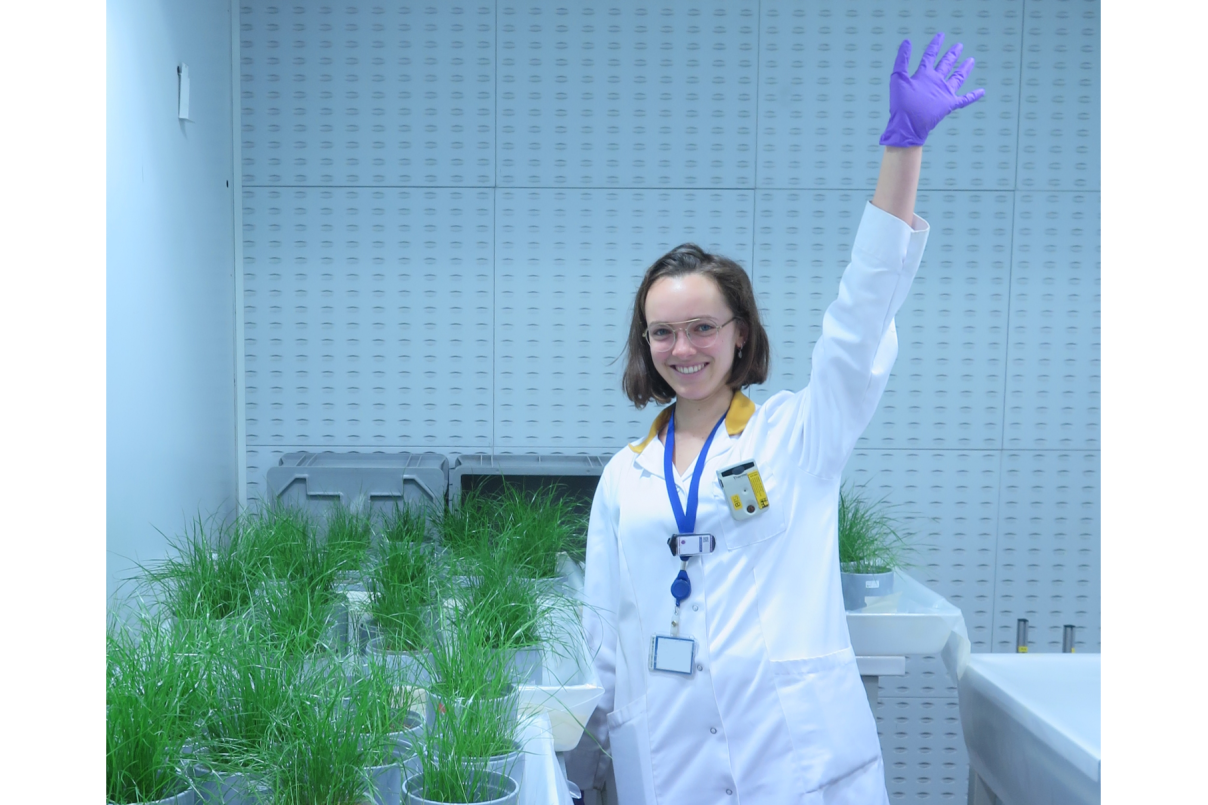
First, a systematic review was conducted, yielding a harmonized database on radiocaesium transfer from soil to plants covering various climates and soils. The results revealed that soils from tropical climates were underrepresented but that these soils yield much higher radiocaesium transfer to crops than soils from temperate climates, highlighting the need for more diverse data from soils from tropical climates. While traditional mechanistic models worked well for smaller datasets, artificial intelligence models proved to be more effective when handling larger datasets. We conducted greenhouse experiments to gain further insights into the role of clay mineralogy in soils on the bioavailability of radiocaesium in soil. Results showed that radiocaesium availability to plants varied over two orders of magnitude depending on the clay mineralogy at equal clay content. For example, soils from tropical climates with highly weathered clays retain less radiocaesium, and low potassium contents in these soils allow plants to take up more radiocaesium. These findings counter previous assumptions of models that mineral soils are much less vulnerable than peat soil. The results also show that soil mineralogy can be incorporated into models to better predict radiocaesium transfer in soils around the world. Soil mineralogy is not known at a global scale with high resolution. However, this research has shown that the standard soil properties complemented with soil classification can improve the predictions.
Promoters:
- Erik Smolders (KU LEUVEN)
SCK CEN mentor:
- Lieve Sweeck
- Talal Al Mahaini